
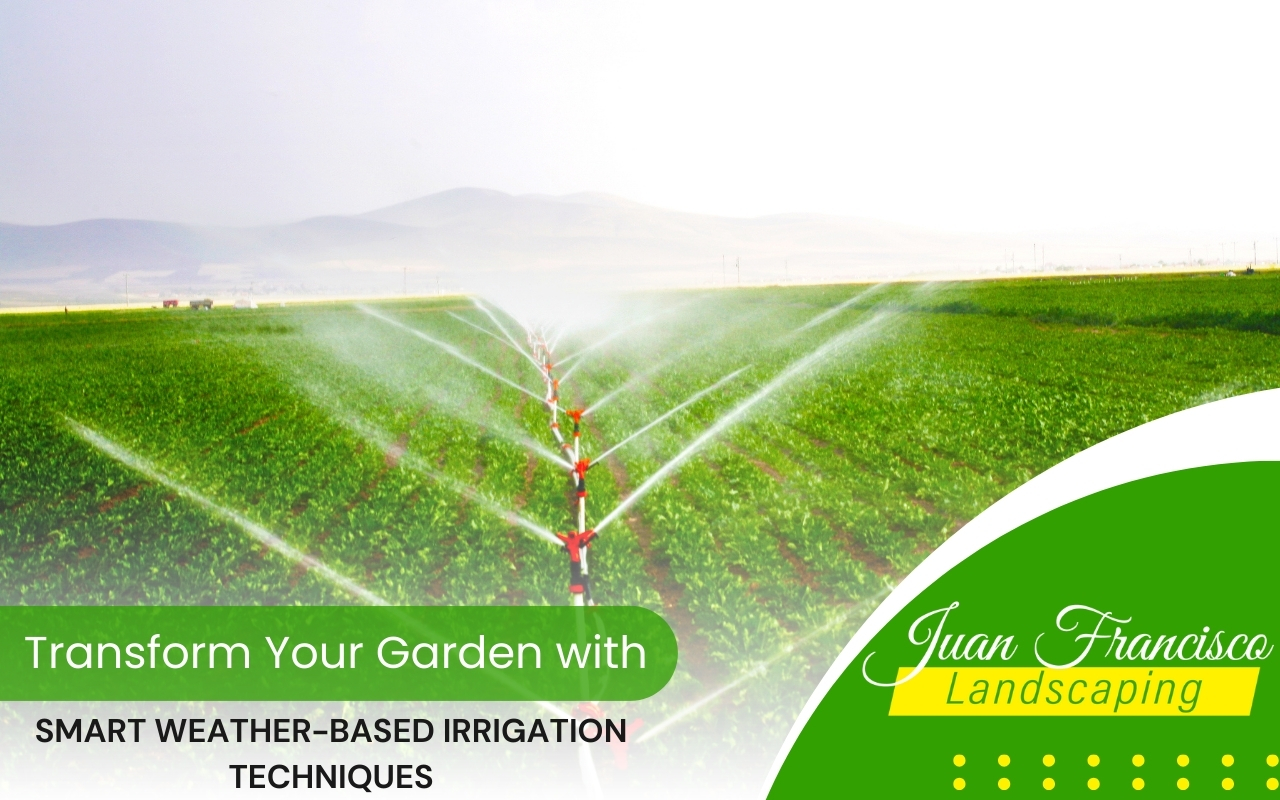
Transform Your Garden with Smart Weather-Based Irrigation Techniques
Imagine a garden so lush that every plant blooms perfectly, thanks to an intelligent system watering precisely when needed.
Picture the serenity of optimizing your garden’s health while conserving water and lowering utility bills. This is now possible with weather-based irrigation.
As climates change, smart irrigation systems become essential. Weather-based irrigation is revolutionizing how gardeners nurture their green spaces efficiently.
This innovative approach uses local weather data to determine exactly when and how much to water plants, ensuring optimal growth.
Gone are worries of overwatering or under-watering. You’re empowered with technology that syncs with nature for environmentally conscious gardening.
Ready to transform your garden into a self-sustaining oasis? Explore efficient irrigation system setups today.
Understanding Weather-Based Irrigation Systems
At its core, weather-based irrigation uses real-time data such as rainfall, temperature, humidity, wind, and solar radiation.
Unlike traditional timers, it adjusts watering cycles automatically. Sensors and cloud analytics continuously evaluate forecasts and historical patterns.
The system recalibrates run times for recent rainfall or predicted precipitation, reducing water waste while protecting plant health.
Implementing weather-based irrigation requires a specialized controller that communicates with online weather services and mobile apps for remote management.
Integrating intelligent algorithms ensures each drop is used efficiently, maximizing plant benefit and conserving resources.
Benefits of Smart Weather-Based Irrigation
- Water Savings: Reduce consumption by up to 40%, promoting eco-friendly practices and lower utility bills.
- Improved Plant Health: Precise watering minimizes drought stress, fostering stronger roots and consistent growth.
- Prevents Overwatering: Avoid soil saturation that causes nutrient leaching, root rot, or fungal growth.
- Proactive Alerts: Receive automated notifications for sensor malfunctions or unusual soil moisture trends.
- Simplified Maintenance: Streamlined routines enhance plant vigor and allow homeowners to enjoy their gardens more.
How Weather Data Drives Precision Watering
Weather data guides precision watering by informing your controller of rain events or evaporation risks.
During hot spells or wind advisories, the system adjusts irrigation durations to maintain soil moisture. This ensures plants receive exactly what they need.
Advanced platforms combine data from regional stations, satellites, and on-site sensors. This provides granular insights for microclimates in your garden.
Controllers calculate evapotranspiration rates, soil moisture depletion, and runoff risks, calibrating each zone for optimal hydration.
Choosing the Right Weather-Based Irrigation Controller
Select a controller based on landscape size, number of zones, connectivity, and functionality. Entry-level models handle basic weather adjustments.
Premium units support multiple sensors, solar operation, and API integration for home automation systems. Check compatibility with your existing valves, pipes, and sensors.
User-friendly apps allow monitoring performance and manual overrides. Choose a controller balancing scalability, ease of use, and reliability.
Integrating Soil Moisture Sensors for Enhanced Efficiency
While weather-based irrigation relies on atmospheric data, soil sensors add ground-level insight for precision watering.
Sensors measure water content in root zones, preventing drought stress. Placement is critical to represent all plant varieties accurately.
Linking sensors to your controller triggers watering when thresholds are low, even if weather schedules suggest otherwise.
This combination maximizes water efficiency and promotes uniform, healthy plant growth.
Factors to Consider When Implementing Weather-Based Irrigation
- Climate Variability: Sudden weather changes may require extra sensors for accurate performance.
- Water Pressure: Ensure sufficient pressure for proper irrigation. Booster pumps may be needed.
- Compliance with Regulations: Follow local restrictions and rebates when installing systems.
- Future Expansion: Plan for additional zones or technology upgrades.
- Research and Preparation: Evaluate landscape needs and system compatibility before installation.
Tips for Maintaining and Troubleshooting Your System
Routine maintenance extends system life. Inspect valves, clean filters, and verify sensor calibration seasonally.
Update firmware and apps regularly. For troubleshooting, check power supply, network status, and sensor readings against manual tests.
Document anomalies and contact support if issues persist. For expert guidance, visit our contact page.
Embracing Sustainable Gardening Practices
Weather-based irrigation supports sustainable gardening by reducing water waste and runoff. Combine with drought-tolerant plants and mulching for best results.
Share your success stories with neighbors and local gardening groups to inspire broader adoption of smart irrigation.
FAQs About Weather-Based Irrigation
What is weather-based irrigation?
It’s a system that adjusts watering schedules using real-time weather data to optimize plant hydration.
Can I control it remotely?
Yes, most systems allow management through mobile apps or web dashboards.
Does it work with my existing irrigation setup?
Check compatibility with valves, sensors, and pipes to ensure seamless integration.
How do I maintain a weather-based irrigation system?
Inspect sensors, clean components, update firmware, and monitor alerts regularly for efficient operation.
Next Steps for Your Smart Garden
Upgrade your garden with smart irrigation systems for maximum efficiency.
Learn more about spring irrigation setup to ensure your garden thrives year-round.