Exploring Essential Wall Drainage Tips Every Homeowner Should Know
Water behind a wall may seem harmless at first, but pressure can build and damage the structure over time. At JF Landscaping, we help homeowners understand how wall drainage protects outdoor spaces, soil, and hardscape features from moisture-related problems.
Early planning can reduce erosion and prevent avoidable repairs. Our approach connects drainage with practical hardscaping services in Knoxville, giving water a safer path away from walls and surrounding landscape areas.
Why Wall Drainage Matters Around Your Property
Water that collects behind a wall creates pressure against the blocks, stone, or concrete. As that pressure increases, the wall may crack, lean, bulge, or shift. A suitable drainage path releases water before it can place too much stress on the structure.
Drainage also supports erosion control. Fast-moving runoff can wash away soil near the wall and leave weak or uneven areas. With JF Landscaping, you receive guidance based on the wall, slope, soil, and direction of water movement around your property.
Warning Signs of Wall Water Issues
Small changes often appear before serious damage develops. Checking the wall after rainfall can help you notice moisture, soil movement, or structural changes while the problem is still manageable.
- Puddles that remain near the base of the wall
- Damp spots or mineral marks on masonry surfaces
- Cracks, leaning sections, or visible wall movement
- Soft soil or washed-out areas near the structure
- Water flowing over the top instead of draining away
Mold, repeated staining, and soil gaps can also point to wall water issues. These signs should not be ignored, especially when they return after every storm.
How Retaining Wall Drainage Controls Water Pressure
Retaining wall drainage gives collected water a route through or around the structure. Without that route, the soil behind the wall can become saturated. Wet soil becomes heavier and pushes outward with greater force.
A complete setup often uses a perforated pipe near the base, a free-draining stone layer, and filter fabric. These parts collect water, reduce sediment buildup, and direct moisture toward a safe outlet. Our team at JF Landscaping considers the full path water must follow, not only the area directly behind the wall.
Key Parts of a Reliable Drainage System
Each drainage component has a specific purpose. The best arrangement depends on wall height, material, slope, soil type, and the amount of runoff reaching the area.
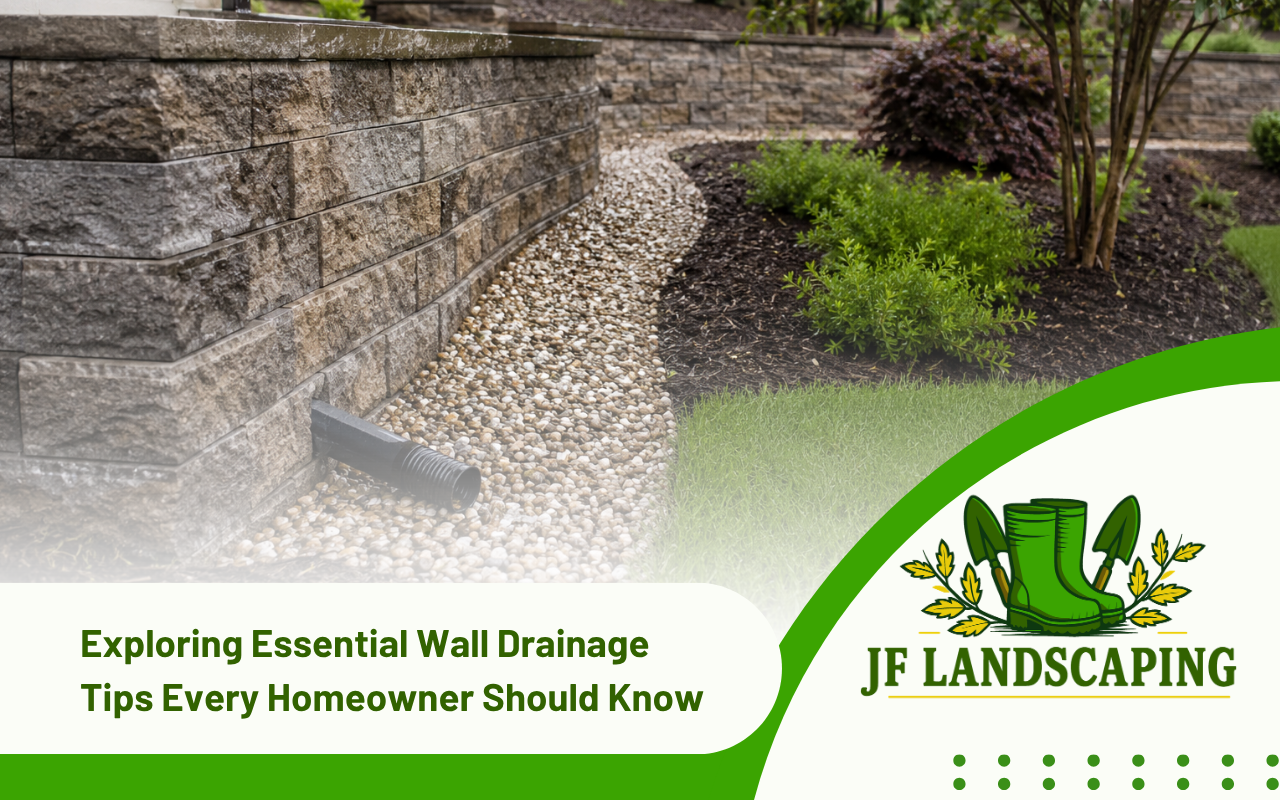
- A perforated drain pipe collects water near the wall base.
- Clean gravel creates open spaces where water can move.
- Filter fabric keeps soil from filling the gravel layer.
- A suitable outlet carries collected water away from the wall.
- Proper grading reduces the amount of surface water entering the backfill.
These features also support the long-term value of well-planned hardscaping. Homeowners can review the benefits of professional hardscaping when planning drainage and outdoor improvements together.
Using Weep Holes and Gravel Backfill Correctly
Weep holes allow trapped water to pass through a wall instead of remaining behind it. Their location, spacing, and size should match the wall design. Poor placement may leave sections without a useful release point.
Gravel backfill helps water reach the pipe or openings more easily. Clean, suitable stone drains better than compact clay soil, which can hold moisture against the wall. Filter fabric separates the soil from the gravel and helps preserve open drainage spaces.
At JF Landscaping, we look at how these elements work together. One feature alone may not solve the problem when runoff, grading, or the outlet location also needs attention.
When Does Professional Drainage Help Make Sense?
Minor surface runoff may be improved with simple grading or cleaning. Professional evaluation becomes more important when the wall is leaning, cracking, separating, or holding water after repeated storms. Large erosion areas and blocked outlets also deserve closer attention.
Knoxville wall drainage may require a plan that accounts for changing slopes, concentrated runoff, and local soil conditions. A professional can identify where water enters, where it collects, and where it can leave without creating a new problem elsewhere.
Frequently Asked Questions
What causes water to build up behind a wall?
Water often builds up because compact soil, poor grading, clogged pipes, or missing outlets prevent it from escaping. Planning drainage during a broader project can improve both function and appearance. These front yard hardscaping ideas can help homeowners consider how walls, slopes, and drainage fit together.
Are weep holes enough for every retaining wall?
No. Weep holes may release some trapped water, but many walls also need gravel, filter fabric, a drain pipe, and a clear outlet. The full system should move water from behind the wall to a safe discharge area.
How can I tell whether a drain pipe is blocked?
Slow drainage, standing water, wet soil, or little flow from the outlet may point to a blockage. Our team can review the area and identify practical next steps through the JF Landscaping contact page.
Can poor drainage cause a retaining wall to lean?
Yes. Saturated soil adds weight and pressure behind the wall. Over time, that pressure can push the structure outward. A leaning wall should be assessed before movement becomes more severe.
How often should wall drainage be checked?
Check visible outlets, weep holes, and nearby soil several times each year and after heavy rain. Remove leaves and debris that restrict flow. For recurring concerns, use our Knoxville hardscaping service information to explore professional support.
Plan Better Drainage for a Stronger Landscape
Acting early can protect the wall, nearby soil, and surrounding outdoor features. Effective wall drainage should manage both water behind the structure and runoff approaching it from higher ground.
- Observe where water flows during and after rainfall.
- Check the wall for cracks, movement, stains, and blocked openings.
- Keep outlets, gutters, and nearby drainage paths clear.
- Seek help when erosion or structural movement continues.
When you choose JF Landscaping, we assess the wall and surrounding landscape as one connected system. Share your drainage concerns through our wall drainage contact page so we can discuss a practical path forward for your Knoxville property.