
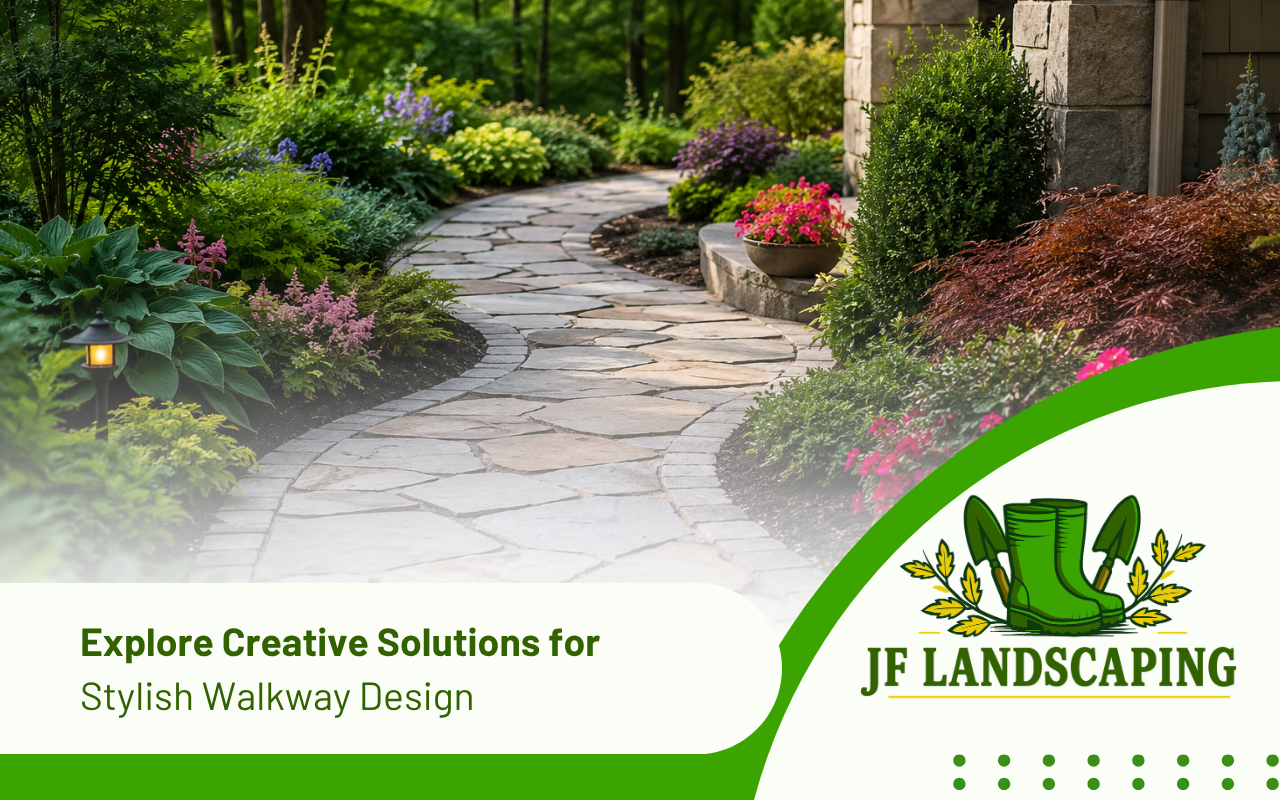
Explore Creative Solutions for Stylish Walkway Design
A well-planned path should do more than lead from one place to another. It should solve real outdoor problems, such as muddy foot traffic, unsafe slopes, poor curb appeal, or a garden that feels hard to enjoy. For more ideas, see our front yard hardscaping ideas.
At JF Landscaping, we look at how people actually use the yard before shaping a path. Good walkway design supports daily movement, protects planted areas, and gives your outdoor space a clear, welcoming flow.
Plan A Path Around Real Yard Use
Start by walking the route you already take. Many homeowners notice worn grass between the driveway and front door, around side gates, or near patios. These marks often show where a path is needed most.
A straight path can feel formal and direct near an entry. A curved path can slow the pace and make a garden feel more relaxed. Before choosing materials, mark the route with a hose or rope and check how it feels from both directions.
Which Walkway Materials Work Best In Maryville?
The best walkway materials depend on traffic, slope, drainage, and the look of your home. With JF Landscaping, you can compare options based on how they perform, not just how they look in a photo.
- Concrete pavers work well for busy entries because they create a steady walking surface.
- Natural stone suits garden paths where texture and an organic look matter most.
- Gravel can help with drainage, but it needs strong edging to stay in place.
- Brick adds a classic look, especially near porches, older homes, and formal beds.
If your yard has clay soil or areas that stay wet after rain, avoid choosing materials based on style alone. Our guide to hardscaping material choices explains how surface, base, and durability affect outdoor projects.
Garden Path Ideas With Practical Purpose
The most useful garden path ideas often begin with a simple goal. You may want to protect flowers from foot traffic, connect a patio to a fire pit, or make a side yard easier to cross after rain.
- Use stepping stones for a light-use path through planting beds.
- Add a wider landing near gates, steps, or seating areas.
- Place low plants along edges to soften pavers or stone.
- Use a border material to keep mulch, gravel, or soil off the path.
For example, a narrow side yard may work better with rectangular pavers and gravel between them. A backyard garden may feel better with irregular stone, soft curves, and low plants that invite people to slow down.
Layouts That Guide Movement Naturally
A strong layout should feel easy to follow. If guests need to guess where to walk, the path may be too hidden, too narrow, or not connected to the right destination. This is where small design choices make a big difference.
Use curves where you want a slower garden experience. Use straight lines where people need a clear route, such as from a driveway to a front porch. Keep turns gentle enough for daily use, especially when carrying groceries, tools, or outdoor items.
A walkway can also connect with patios, walls, and other outdoor features. Our hardscaping services in Maryville TN can help align paths with the full layout of your outdoor space.
Safety Details That Improve Daily Comfort
A beautiful path can still fail if it feels unsafe. Our team at JF Landscaping checks slope, surface texture, drainage, and transitions so the walkway supports daily use in different weather conditions.
- Keep surfaces even to reduce trip points.
- Use textured materials in areas that may get wet.
- Add lighting near steps, curves, and entry points.
- Trim plants back so branches do not block the walking route.
Expert tip: check the path at night before finalizing light placement. Stand at the porch, driveway, and patio to see where shadows fall. This helps place lights where people need guidance, not just where fixtures look decorative.
Sustainable Choices For Better Long-Term Results
Sustainable walkway design is not only about eco-friendly materials. It is also about building a path that drains well, lasts longer, and needs less correction later. A poor base can cause shifting even when the surface material is high quality.
Permeable pavers, gravel sections, and spaced flagstone can allow more rainwater to move into the ground. Native plants near the edge can also reduce watering needs while making the path feel more connected to the landscape.
Frequently Asked Questions
How do I know where a walkway should go?
Look for the route people already use. Worn grass, muddy spots, and repeated shortcuts are strong clues. A planned path should make that route safer, cleaner, and more attractive.
What walkway materials need the least care?
Pavers and natural stone can be good low-care choices when installed over a solid base. For more guidance, review our guide to hardscaping materials.
Can a small yard still use creative garden path ideas?
Yes. Small yards often benefit from simple paths with clear edges, stepping stones, and plants that frame the route. The design should feel useful first, then decorative.
Can a Maryville walkway connect with other hardscaping?
Yes. A Maryville walkway can connect patios, garden beds, retaining walls, and outdoor seating areas. At JF Landscaping, we can plan these features together through our Maryville hardscaping services.
When should I ask for walkway design help?
Ask for help when you have drainage issues, uneven ground, unclear routes, or a path that does not match your home. You can share your project through our contact page.
Start With A Walkway That Solves Problems
The best path should feel natural, safe, and connected to the way you use your yard. Strong planning helps you avoid weak materials, awkward turns, poor drainage, and designs that only look good on paper.
When you choose JF Landscaping, we help shape a walkway that fits your home, your yard, and your daily routine. To plan a better Maryville walkway, contact our landscaping team and tell us what you want to improve.