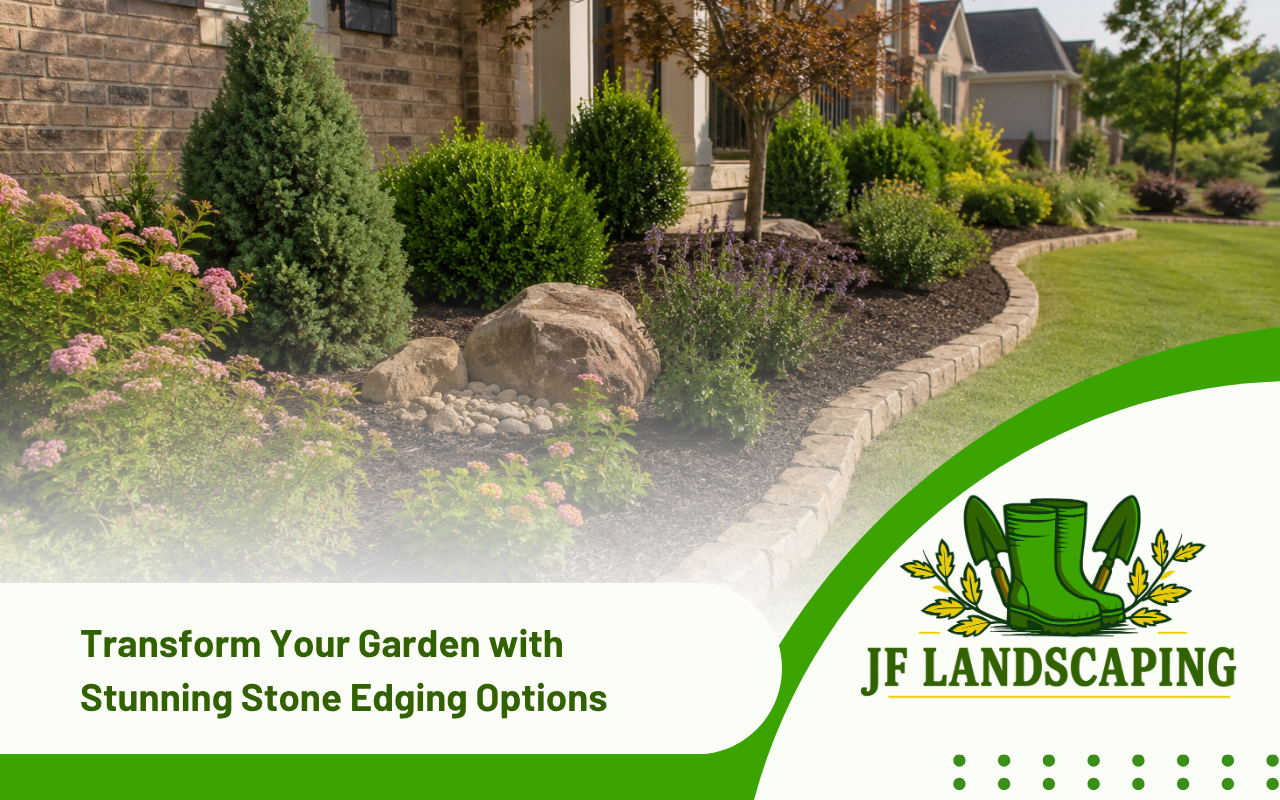
Transform Your Garden with Stunning Stone Edging Options
Stone edging gives garden beds a clear, finished shape while separating grass, soil, mulch, and walkways. It can improve daily maintenance, support cleaner lawn lines, and bring lasting structure to both residential and commercial landscapes.
At JF Landscaping, we focus on practical design choices that suit each property. The right border should match the home, planting style, drainage needs, and surrounding features. Our guide to choosing hardscaping materials can help you compare suitable outdoor materials.
Practical Benefits of Defined Garden Bed Edges
A defined border gives each part of the landscape a clear purpose. It separates lawn areas from planting beds and helps keep mulch, gravel, and soil where they belong. This structure can make routine trimming easier and reduce the untidy look caused by spreading grass.
Stone edging also adds visual balance. Solid natural materials create a useful contrast with flowers, shrubs, and ground cover. The result is a landscape that looks carefully planned without feeling too formal or crowded.
Properly placed borders may also help manage light runoff around planting areas. Although edging does not replace a drainage system, it can support a more stable bed layout and help reduce minor soil movement near the lawn.
Choosing Landscape Edging Stone for Your Property
The right landscape edging stone should support the style and function of the property. Natural shapes often suit relaxed gardens, while cut materials create cleaner lines for modern or formal spaces. Color, texture, size, and height all affect the final appearance.
- Flagstone creates wide borders with a natural appearance.
- Cobblestone adds classic shape and clear visual definition.
- River rock works well in relaxed planting areas.
- Granite supports clean lines and strong contrast.
- Brick complements many traditional homes and walkways.
Our team at JF Landscaping looks at nearby patios, paths, walls, and building materials before recommending a direction. A coordinated border can connect separate outdoor features and make the full landscape feel more consistent.
Which Edging Materials Match Your Design Goals?
Edging materials vary in shape, strength, texture, and maintenance needs. The best option depends on the location of the border and the effect you want to create. A front entry bed may need a polished finish, while a backyard garden may suit a softer, more natural edge.
- Choose natural stone for varied color and organic texture.
- Select cut stone for straighter lines and tighter spacing.
- Use brick to add warmth and familiar garden character.
- Consider concrete pavers for consistent shapes and simple layouts.
- Match the border with nearby outdoor surfaces when possible.
Material size should also match the scale of the bed. Large stones can ground wide planting areas, while smaller pieces may follow curves more easily. Our hardscaping material guide explains more factors to consider.
Planning a Stable and Detailed Edging Installation
A dependable edging installation begins with careful layout and ground preparation. Curved borders can be marked with a hose, while straight sections can be planned with string. This step allows the shape to be reviewed before grass or soil is removed.
With JF Landscaping, you receive recommendations based on the condition of the site, the selected material, and the surrounding landscape. A suitable base helps the stones remain level and reduces the chance of early movement.
- Mark the complete border before digging begins.
- Remove grass, roots, and loose soil from the trench.
- Prepare a level base suited to the chosen material.
- Set each stone at a consistent height and spacing.
- Backfill the edges to improve support and stability.
Careful workmanship is important in both visible and hidden areas. A border may look attractive when first installed, but proper support underneath is what helps it keep its shape through regular weather and yard use.
Creating Bed Borders for Cleaner Lawn Separation
Well-planned bed borders make the transition between turf and planting areas easier to manage. They can reduce grass growth into mulch and create a more direct trimming line. This keeps the landscape looking orderly between regular maintenance visits.
Curved borders create a softer flow around trees, shrubs, and flower beds. Straight borders suit narrow side yards, modern buildings, and formal garden plans. The best shape should follow the property instead of forcing a design that feels out of place.
Border height also affects function. Lower edges may allow easier mowing beside the bed. Raised stones create stronger definition and may help contain mulch or added soil in deeper planting areas.
Improving Curb Appeal with Maryville Edging
Maryville edging can give front-yard beds, entry paths, and driveway plantings a cleaner appearance. Clear lines guide the eye toward the property and show that each section of the landscape has been planned with care.
When you choose JF Landscaping, we consider local property styles, common landscape layouts, and the way outdoor areas are used. Light stone may brighten shaded beds, while gray or brown materials can create useful contrast against green lawns.
Curb appeal edging should support the home rather than compete with it. Repeating similar tones near walkways, patios, or retaining features can create a more connected design. To discuss suitable options, contact our local landscaping team.
Frequently Asked Questions
How long can stone garden edging last?
The lifespan depends on the material, base preparation, soil conditions, drainage, and ground movement. Durable stone placed on a stable foundation can remain useful for many years. Review our hardscaping material recommendations before choosing a border.
Can stone borders follow curved garden beds?
Yes. Smaller stones, irregular pieces, and selected pavers can follow gentle or detailed curves. Careful marking and spacing help the finished line look smooth. You can ask our team about curved border installation for your property.
Does edging make lawn maintenance easier?
A defined edge can limit grass growth inside planting areas and create a clearer line for trimming. Results depend on the height, depth, and placement of the border. For practical recommendations, discuss lawn separation with our team.
Should edging stones sit above lawn level?
Some borders sit close to the lawn, while others rise higher for stronger definition. A low edge may be easier to mow beside. A raised edge can help hold mulch and soil inside the planting bed.
Can different stone types be used together?
Different stones can work together when their colors, shapes, or textures are compatible. Too many finishes may make the landscape look busy. One main material with a simple accent usually creates a more balanced result.
Plan a More Functional and Finished Landscape
Stone edging can improve lawn separation, define planting areas, and give the property a more complete appearance. The best results come from choosing suitable materials, preparing the base carefully, and matching the design to the surrounding landscape.
At JF Landscaping, we provide personalized recommendations and careful workmanship for each property. To plan practical bed borders that improve both beauty and function, request a landscape edging consultation.