
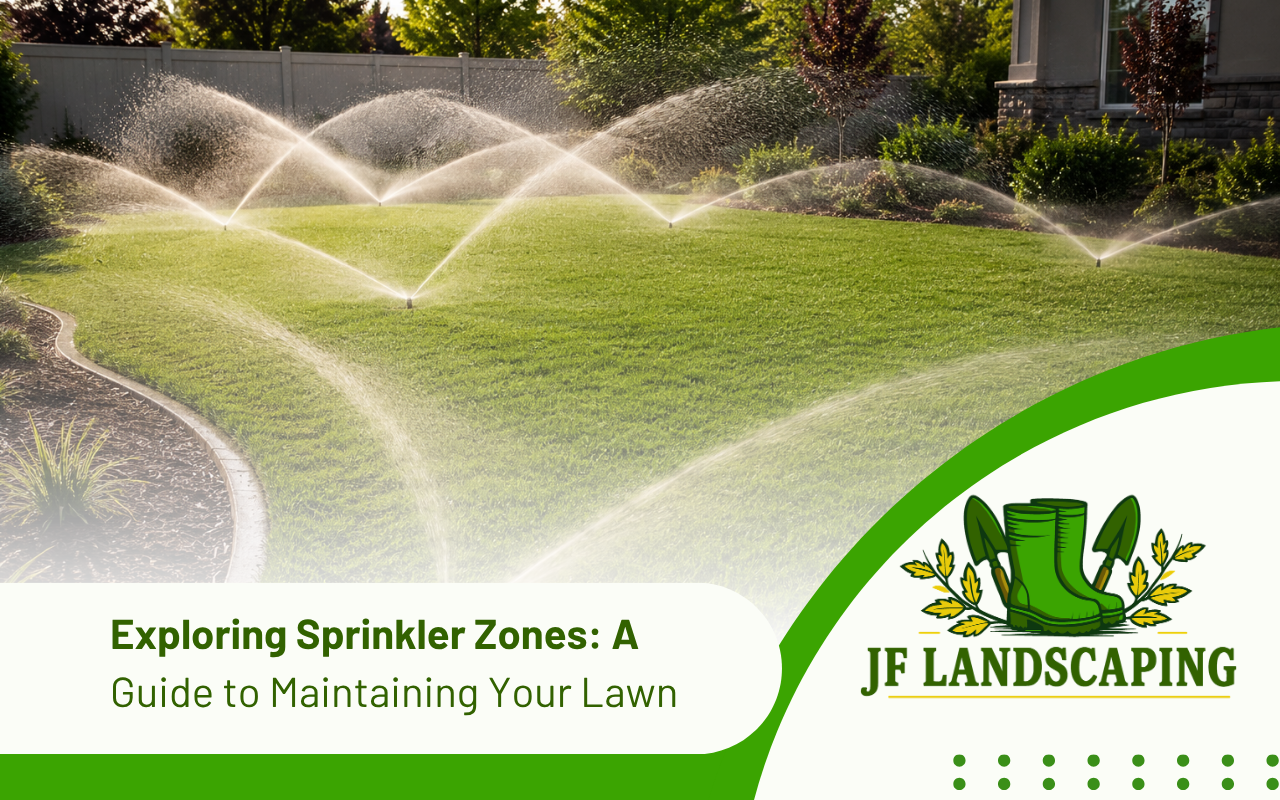
Exploring Sprinkler Zones: A Guide to Maintaining Your Lawn
A healthy lawn needs water in the right place, at the right time. When sprinkler zones are planned well, each part of your yard gets care based on sun, soil, slope, and plant needs.
At JF Landscaping, we often see watering problems start with one simple issue: every part of the yard is treated the same. This guide explains how smart zone planning, careful timing, and proper irrigation design can support a greener yard.
How Sprinkler Zones Support Healthy Lawn Growth
Sprinkler zones divide your yard into smaller areas so each section can receive the right amount of water. A sunny front lawn may need a different schedule than a shaded side yard. Beds, turf, slopes, and narrow strips often need different spray patterns and timing.
Think of a front yard with full sun near the street and shade near the house. If both areas water for the same length of time, one section may dry out while the other stays too wet. Good irrigation zones help prevent that imbalance.
Key Signs Your Irrigation Zones Need Attention
Many yard problems begin with uneven sprinkler coverage. Some areas may stay soggy while others look dry soon after watering. When you notice these signs, it may be time to inspect each zone and make simple adjustments.
- Dry patches that appear in the same area often
- Water running onto sidewalks, driveways, or streets
- Sprinkler heads spraying fences, walls, or hard surfaces
- Grass that feels soft, muddy, or weak underfoot
- One zone turning on while another zone stays inactive
A helpful test is to walk the lawn after one full watering cycle. Look for shiny wet areas, puddles, and spots that still look dusty. These signs often show where a zone needs better aim, timing, or pressure balance.
What Makes Sprinkler Coverage Even And Reliable?
Even sprinkler coverage starts with correct head placement. Sprinkler heads should be spaced so their spray patterns meet, not leave gaps. If heads are too far apart, dry areas form. If they overlap too much, the lawn may receive more water than it can absorb.
Ground slope, plant height, wind, and water pressure can also affect coverage. Our team at JF Landscaping can review these details and connect them with efficient irrigation system setup practices that improve daily watering.
Smart Ways To Set Zone Watering Time
Zone watering time should match the soil and plants in each section. Sandy soil often drains faster, while clay soil holds water longer. A short test with a rain gauge or straight container can show how much water your system applies during one cycle.
- Water early in the morning to reduce evaporation
- Use shorter cycles on slopes to limit runoff
- Adjust shaded areas separately from sunny areas
- Check watering time after replacing sprinkler heads
- Reduce watering after steady rainfall
For example, if a zone puts down water faster than the soil can absorb it, do not simply shorten the total schedule. Split the run into two shorter cycles with a pause between them. This gives water time to soak deeper.
Seasonal Changes That Affect Watering Needs
Your lawn does not need the same amount of water all year. Spring often brings cooler weather and more rain, so many zones need less time. Summer heat can dry the soil faster, which may require schedule changes.
Fall usually brings slower growth and cooler nights. During this season, a lighter schedule may be enough. With JF Landscaping, you can make seasonal changes that keep your yard healthy without using more water than needed.
Common Sprinkler Zoning Problems And Simple Fixes
Sprinkler zoning problems are easier to manage when you check one zone at a time. Turn on each zone and watch how the heads rise, spray, and shut off. This simple review can reveal leaks, clogs, low pressure, or poor aim.
- Clean clogged nozzles when spray patterns look uneven
- Replace broken heads that leak or fail to rise
- Adjust spray direction away from hard surfaces
- Check valves when one zone does not activate
- Look for soft soil that may point to a hidden leak
One practical tip is to mark problem spots with small flags while the system runs. After the water shuts off, it is easier to return to each area and adjust the head, inspect the nozzle, or check the nearby soil.
Frequently Asked Questions
How do I know if my sprinkler zones are set correctly?
Your zones are likely set well when the lawn receives even moisture without puddles, dry patches, or runoff. A full system check can also show whether your current layout matches your yard. For deeper planning, review our irrigation system design principles.
How long should each irrigation zone run?
Each irrigation zone should run based on soil type, sun exposure, slope, and plant needs. Some areas need short cycles with soaking breaks. Others may need less frequent watering. Testing output with a small container can help you set a better schedule.
Can smart controllers improve zone watering time?
Yes. Smart controllers can adjust watering based on weather, moisture, and seasonal changes. They can also reduce waste when rain is expected. At JF Landscaping, we can help you understand how smart controls fit into an efficient irrigation system setup.
Should flower beds and lawn areas be in the same zone?
It is usually better to separate them when possible. Turf, shrubs, flowers, and garden beds often need different watering methods. Drip lines may work better for beds, while spray heads may fit lawn areas.
When should I call a professional for sprinkler zoning?
You should call a professional when zones do not turn on, water pressure is low, or coverage stays uneven after basic adjustments. For local help, explore irrigation system installation in Maryville TN.
Plan Better Watering With A Local Team
Better watering begins with a system that matches your lawn, soil, and plants. When you choose JF Landscaping, we look at how each zone works as part of the full yard, not as a separate piece.
With the right adjustments, sprinkler zones can support steady growth, reduce waste, and make lawn care easier. To discuss your yard and improve your watering plan, contact JF Landscaping for clear next steps.