Dig Into Your Garden’s Health with Soil Testing Tips
Healthy grass and plants begin below the surface. Soil testing can show whether your yard has the right pH, nutrients, and structure for strong growth. At JF Landscaping, we use this information to make better choices before improving lawns and planting areas.
Testing is especially useful before laying new turf. It can reduce guesswork and support the steps in our guide to successful sod installation. A clear soil report helps you understand what your landscape needs before work begins.
Healthy Soil Creates a Strong Planting Foundation
Plants depend on soil for water, air, nutrients, and root support. When the soil is compacted, too acidic, or missing key nutrients, grass may grow slowly. Bare patches, pale color, weak roots, and poor drainage can also point to problems below the surface.
Soil testing gives you useful facts before you add fertilizer or other materials. Our team at JF Landscaping can use those results to plan practical improvements for the lawn. This approach can prevent unnecessary treatments and keep the focus on the conditions that affect plant growth.
Maryville soil can vary between properties and even between different areas of the same yard. One section may drain well, while another holds water or contains compacted clay. Separate samples can help you understand these differences and plan the right care for each area.
What Can a Lawn Soil Test Reveal?
A lawn soil test provides a closer look at the conditions around the roots. Basic home kits may offer quick results, while a laboratory test can provide more detail. The right choice depends on your project and the information you need.
- Soil acidity or alkalinity
- Available nitrogen, phosphorus, and potassium
- Organic matter levels
- Possible nutrient shortages
- Recommended amounts of lime or other materials
Testing before planting may also support better long-term results. After sod is installed, proper watering, mowing, and soil care can help improve sod longevity and protect the new root system.
Soil pH Affects Nutrient Use and Growth
Soil pH measures how acidic or alkaline the ground is. This number matters because it affects how well plants can use available nutrients. Even fertile soil may not support healthy growth when the pH level makes those nutrients difficult for roots to absorb.
Most lawn grasses grow well in soil that is slightly acidic to neutral. However, the ideal range can depend on the grass type and local conditions. A soil pH lawn result can show whether lime or another adjustment may be useful.
Changes should be made carefully. Adding too much lime or sulfur may create a new imbalance. Follow the test recommendations, apply materials evenly, and allow time for the soil to respond before testing again.
Understanding Nutrient Results Without Adding Too Much
A nutrient test usually measures important plant nutrients, including phosphorus and potassium. Some reports also include calcium, magnesium, and organic matter. Nitrogen may be handled differently because its level can change quickly with rain, temperature, and plant activity.
Review each result in relation to your landscape goals. Grass, flowers, shrubs, and vegetables may have different needs. Soil testing helps you avoid applying a general fertilizer when only one nutrient or condition needs attention.
More fertilizer does not always create better growth. Too much of one nutrient can affect the availability of another. It can also lead to weak growth or unwanted runoff. Following measured recommendations supports a more balanced approach.
Collecting Soil Samples for More Useful Results
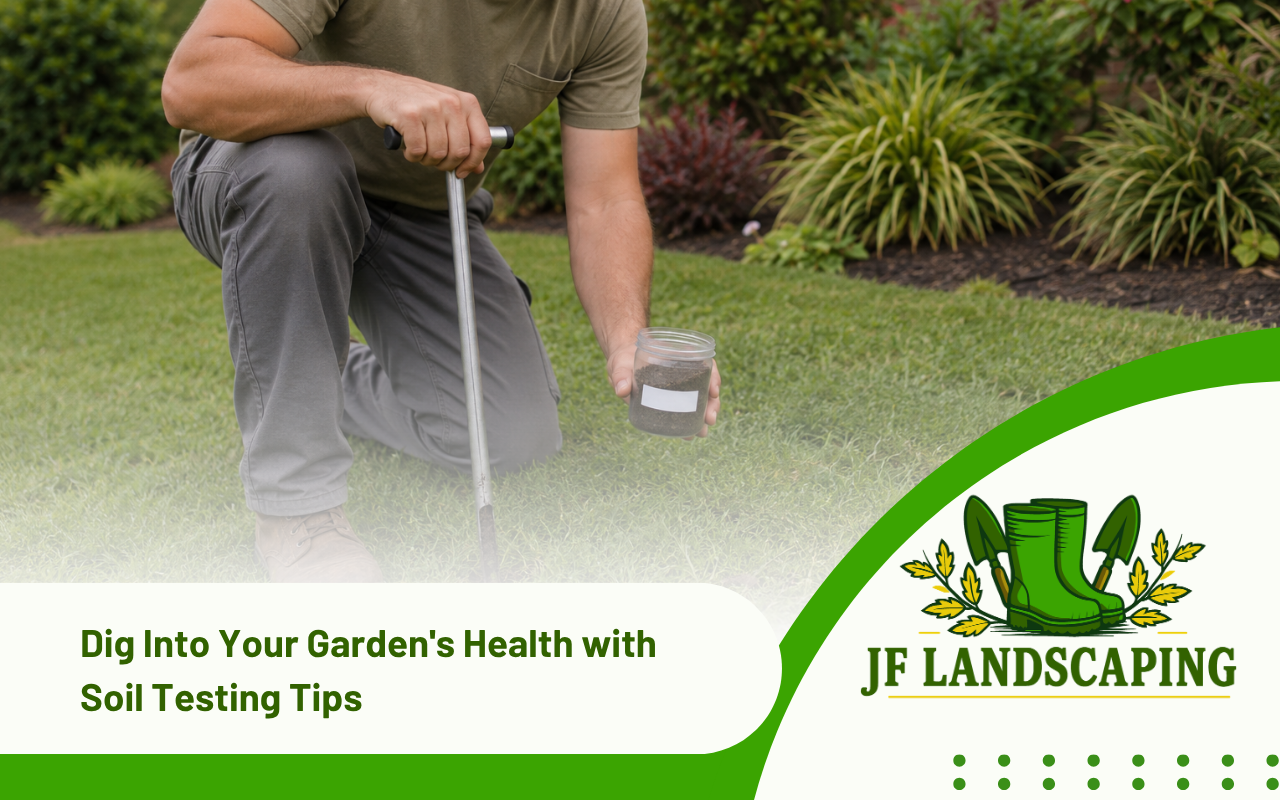
A test is only useful when the sample represents the area you want to improve. Avoid mixing soil from lawns, flower beds, and vegetable gardens. These spaces often have different conditions and should be tested separately.
- Use a clean trowel, bucket, and sample container.
- Remove grass, mulch, and loose material from the surface.
- Collect small samples from several places in the same area.
- Take soil from the recommended depth for your test.
- Mix the samples together in the clean bucket.
- Label the final sample with its location and date.
Do not collect samples directly after heavy rain or from unusual spots near compost piles and drainage outlets. With JF Landscaping, you can also consider how test results fit into a larger Maryville sod installation plan.
Applying Soil Amendments Before Sod Installation
Soil amendments can improve pH, nutrient balance, drainage, or organic matter. The correct material depends on the test results. Adding products without testing may waste effort or create conditions that make healthy root growth more difficult.
- Lime may raise soil pH when the ground is too acidic.
- Sulfur may lower pH when the soil is too alkaline.
- Compost may improve organic matter and soil structure.
- Recommended fertilizer may correct a specific nutrient shortage.
- Proper grading may help manage drainage problems.
The best soil for sod should allow roots to reach moisture, air, and nutrients without sitting in standing water. Amendments often need time to mix with the ground. Preparing the site before delivery gives new turf a more stable place to establish.
Frequently Asked Questions
How often should lawn soil be tested?
Many lawns can be checked every few years, but testing may be useful sooner when growth changes or major work is planned. You can also review our advice for keeping sod healthy over time.
Can I test different areas together?
Combine samples only when the areas have similar plants, drainage, and soil conditions. Keep problem spots and separate planting areas in different containers. This gives you clearer results and more useful recommendations.
Should soil be tested before laying sod?
Yes, testing before installation can reveal pH or nutrient concerns before the ground is covered. When you choose JF Landscaping, we can connect soil preparation with the full process described in our sod installation best practices.
Are home soil test kits accurate?
Home kits can offer a helpful basic reading, especially for pH. Laboratory tests often provide more detail and specific recommendations. Follow all collection instructions closely because poor sampling can affect either type of result.
What should I do after receiving the results?
Read the recommendations before buying or applying materials. Make changes in the suggested amounts and record what you use. For help planning the next step, visit our landscaping contact page.
Build Healthier Soil for Lasting Lawn Growth
Healthy soil supports stronger roots and makes lawn care more effective. Testing first can help you understand pH, nutrients, and site conditions before you fertilize, amend the ground, or install new sod.
At JF Landscaping, we focus on practical preparation that fits your property and lawn goals. To discuss soil conditions or a sod project in Maryville, contact our landscaping team and share what you have noticed in your yard.