Revive Your Lawn: Essential Steps for Sod Patching Success
Winter, foot traffic, pests, and dry weather can leave yellow patches or bare soil across your yard. Sod patching is a practical way to bring back a smooth, green look without replacing the full lawn.
At JF Landscaping, we look at the cause of the damage before placing new grass. For better early results, our sod installation best practices can also guide each repair step.
Check Lawn Damage Before Making Repairs
Start by walking across the yard and looking for weak grass, yellow areas, and lawn bare spots. Mark each damaged place so you can return to it later. Measure the size of each area to know how much sod you may need.
Before you patch dead grass, check for the reason behind the problem. Heavy shade, compact soil, poor drainage, pet damage, or insects can all cause grass to fail. Fixing the cause first helps the new sod grow instead of repeating the same damage.
How Can New Sod Match Existing Grass?
The best repair blends with the lawn already in place. Look closely at the grass blade width, color, and growth habit. Matching the grass type helps avoid clear lines between old turf and new sod.
For local yards, Maryville sod should fit the climate, sun level, and soil conditions. With JF Landscaping, you can plan a repair that fits the yard instead of guessing. You can also review our Maryville sod installation guidance for local lawn needs.
Prepare Soil For Strong Root Contact
New sod needs clean, loose soil to grow strong roots. Remove dead grass, weeds, rocks, and old roots before placing any sod piece replacement. A firm but workable soil bed gives the new grass a better start.
- Cut out the damaged grass in a clean shape.
- Loosen the top layer of soil so roots can move down.
- Add compost if the soil feels poor or compacted.
- Rake the area smooth and level with the rest of the lawn.
Cut And Place Sod Pieces Cleanly
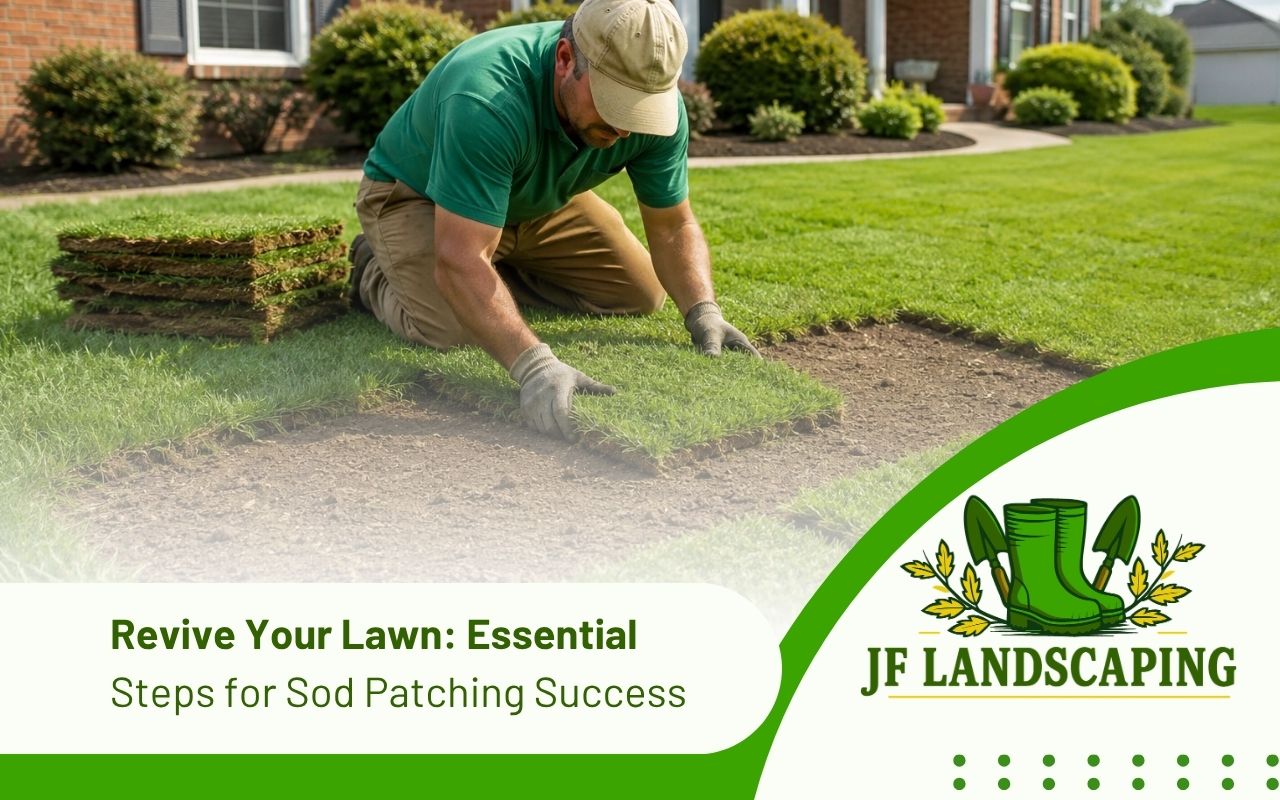
Measure each repair area before cutting. Add a little extra around the edges, then trim the piece for a tight fit. Clean cuts help the patch sit flat and connect well with the surrounding lawn.
- Use a sharp knife to cut through grass and roots.
- Place the sod firmly against the edge of the old grass.
- Avoid overlaps because they can dry out or turn brown.
- Press the patch down so the roots touch the soil.
Our team at JF Landscaping can handle sod spot repair when the bare areas are uneven, large, or hard to shape. A careful fit helps the repaired area settle faster and look more natural.
Water And Feed Repaired Sod Properly
Watering repaired sod matters as much as the placement. New roots need steady moisture, but soaked soil can cause stress. The goal is damp soil under the sod, not standing water on top.
- Water right after installation with a soft spray.
- Keep the surface moist during the first week.
- Move to deeper watering as roots begin to grow.
- Wait before fertilizing so the roots can settle first.
Good aftercare protects your work and supports long-term color. For more care tips, visit our guide to improve sod longevity after a repair or new installation.
Common Problems During Sod Spot Repair
Some patches may turn yellow, sink, or dry at the edges. Yellowing may point to poor watering, weak soil contact, or stress from heat. Sinking often means the soil below was too loose before the sod was placed.
Lift and reset low patches when needed. Add soil under the sod, press it flat, and water again. If pests or disease return, treat the source before adding more grass. This helps sod patching last longer and keeps the lawn more even.
Frequently Asked Questions
When should I repair bare spots in my lawn?
The best time is when the grass can root well and weather is not too harsh. For many yards, spring and early fall are good seasons. You can compare timing with our sod installation best practices.
Can I patch dead grass without replacing the whole lawn?
Yes, many small areas can be repaired without replacing the full yard. The key is to remove the dead grass, prepare the soil, and use matching sod so the repair blends well.
How long should I water repaired sod?
Water often during the first week, then shift to deeper watering as roots grow. The soil should stay moist below the patch. Our sod longevity tips explain how steady care supports stronger turf.
Why do lawn bare spots keep coming back?
Bare spots can return when the main cause is not fixed. Shade, pets, insects, compacted soil, and poor drainage are common reasons. Check the area carefully before adding new sod.
Do I need local sod for a Maryville lawn?
Local sod can be a smart choice because it is more likely to fit the area’s climate and growing conditions. For location-based help, review our Maryville sod service page.
Bring Back A Smooth Maryville Lawn
Sod patching can turn thin, damaged areas into a cleaner and healthier lawn when each step is done with care. When you choose JF Landscaping, we focus on the cause, fit, soil contact, and aftercare so the repair has a stronger chance to blend in.
If your yard has spreading bare spots or uneven patches, our team at JF Landscaping can review the lawn and help plan the right next step. Use our contact page to talk with us about a smoother lawn in Maryville.