
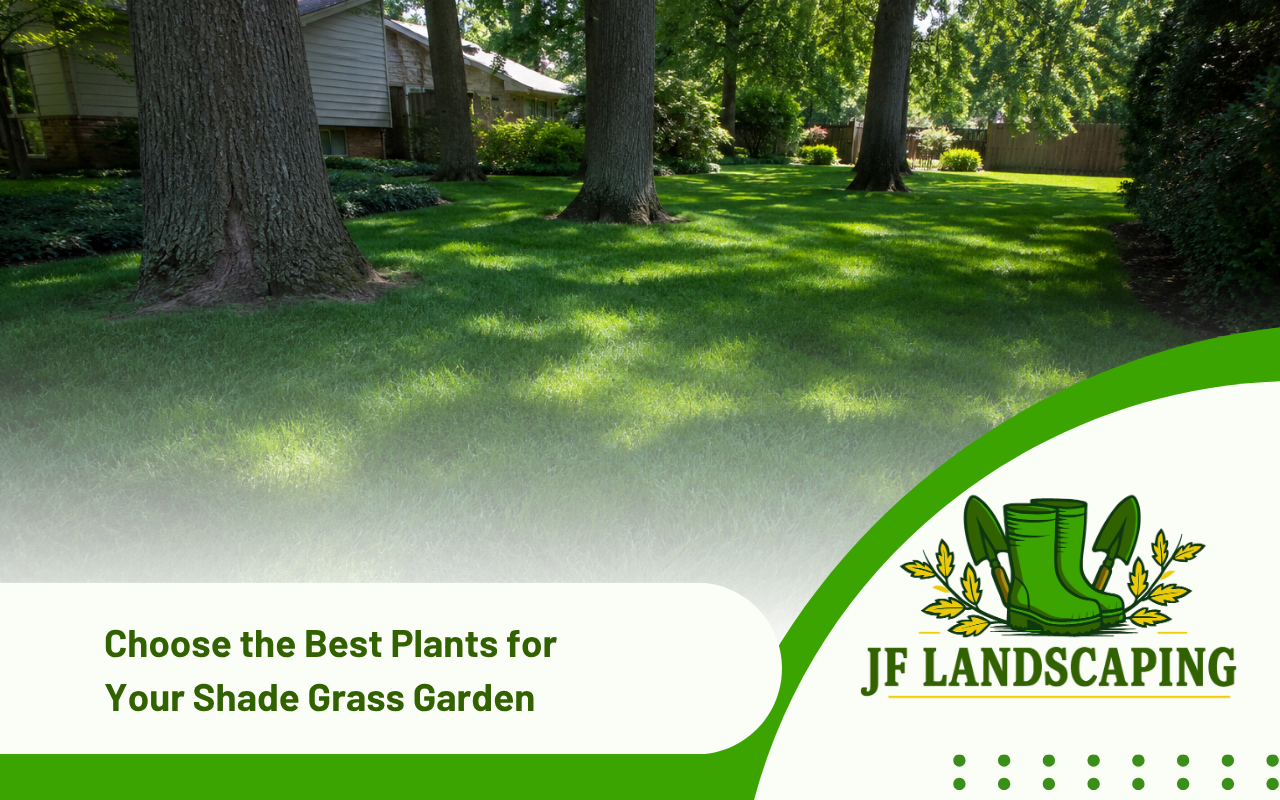
Choose the Best Plants for Your Shade Grass Garden
Growing healthy shade grass begins with understanding the conditions across your property. At JF Landscaping, we look at sunlight, soil moisture, drainage, and nearby trees before suggesting a practical lawn solution. Careful planning can reduce thin growth, bare areas, and unnecessary replacement work.
Grass in low-light spaces usually grows more slowly than turf in full sun. Choosing a suitable variety and following the right sod installation timing can support stronger roots and more consistent coverage.
Understanding Light Levels Across Your Property
Not every shaded area has the same growing conditions. Some spaces receive gentle morning sun, while others remain dark beneath thick branches or beside buildings. Watch each area throughout the day before choosing shade tolerant grass or changing your lawn care routine.
- Light shade usually receives four to six hours of sunlight.
- Partial shade may receive two to four hours of sunlight.
- Dense shade receives very little direct light.
- Dappled shade changes as sunlight moves through branches.
A low light lawn may also remain wet longer after rain. Check whether water drains into the soil or stays near the surface. Limited sunlight, weak air movement, and poor drainage can create conditions where moss and lawn disease become more common.
Which Grass Types Perform Well in Shade?
Fine fescue and tall fescue blends are common choices for cooler areas with limited sunlight. Their narrow blades can use filtered light more efficiently than many sun-loving varieties. The right shade grass depends on local climate, soil condition, foot traffic, and daily light exposure.
Zoysia may handle moderate afternoon shade in some warm-season lawns, but it still needs useful sunlight. With JF Landscaping, property owners receive recommendations based on the full site rather than appearance alone. No turf variety will remain dense in an area that receives almost no light.
Selecting the Best Sod for Shady Areas
The best sod for shade should match your growing conditions and seasonal weather. Fresh sod provides immediate coverage, but it still needs suitable soil, careful installation, and enough sunlight. Installing the wrong variety may lead to thinning once the lawn faces ongoing shade and root competition.
- Measure direct and filtered sunlight during the day.
- Check the soil for drainage and compaction problems.
- Select sod suited to the local growing conditions.
- Prepare the soil carefully before installation.
- Limit foot traffic while new roots develop.
Property owners planning a new lawn can review our guide to sod installation in Knoxville. It covers important preparation and installation details that can support dependable growth in sunny and shaded spaces.
Managing Water in Low-Light Lawn Areas
Watering shade lawn areas requires close attention to soil conditions. Shaded ground often loses moisture slowly, so it may need less frequent watering than nearby sunny sections. However, grass beneath mature trees can dry quickly because large roots absorb much of the available water.
Our team at JF Landscaping recommends checking the soil instead of using one schedule across the entire property. Water early in the morning and allow the grass surface to dry before evening. Deep watering supports stronger roots, while frequent light watering may encourage shallow growth.
Reducing Competition From Mature Tree Roots
A tree roots lawn problem occurs when large roots compete with turf for moisture, nutrients, and growing space. Surface roots may also leave too little soil for grass to establish properly. Adding a thick layer of soil over exposed roots can harm the tree and should be avoided.
For shade grass near mature trees, careful branch thinning may improve light and air movement when proper pruning is suitable. Mulch can be a more practical choice close to the trunk, where grass repeatedly struggles. Keep mulch away from direct contact with the tree trunk.
Practical Care Tips for Dependable Lawn Coverage
Grass in shade usually recovers from stress more slowly than grass in full sun. A careful maintenance routine helps the lawn use limited light more effectively. Mowing height, watering habits, soil condition, and foot traffic should reflect the slower growth found in shaded areas.
- Keep grass slightly taller to capture available light.
- Remove only a small portion of the blade when mowing.
- Avoid heavy fertilizer applications in deep shade.
- Aerate compacted soil when seasonal conditions are suitable.
- Limit repeated walking and play in thin areas.
- Remove fallen leaves before they block more sunlight.
Consistent care can also protect your sod after installation. Our guide on how to improve sod longevity explains practical steps that support healthier roots, better coverage, and lasting lawn performance.
Frequently Asked Questions
Can grass grow without direct sunlight?
Most grass still needs useful light, even when it is described as shade tolerant. Filtered sunlight may support certain fescue varieties, but areas with almost no light often remain thin. Reviewing the best sod installation timing can also improve establishment.
How often should a shaded lawn be watered?
Check the soil before watering because shaded areas may stay moist longer. Water deeply when the upper soil begins to dry, then allow time between watering sessions. Areas beneath trees may need separate checks because large roots can remove moisture quickly.
Why does grass become thin beneath trees?
Grass beneath trees competes for light, water, nutrients, and soil space. Compacted ground and fallen leaves can make the problem worse. Following steps that support long-term sod health may help where enough sunlight remains available.
Should I use seed or sod in shady spaces?
Sod creates immediate coverage, while seed may provide more shade tolerant grass options. The right choice depends on light, soil, season, drainage, and maintenance needs. When you choose JF Landscaping, we assess these details before suggesting a suitable approach.
What can replace grass in deep shade?
Mulch, shade-friendly plants, stepping stones, or planted beds may perform better where turf repeatedly fails. A practical design can protect tree roots and reduce maintenance. Use our contact page to discuss options for your property.
Plan a Healthier Lawn for Shaded Spaces
A successful shaded lawn starts with realistic expectations and careful decisions. Match the grass to the available light, water according to soil conditions, and reduce competition around mature trees. Some areas can support healthy turf, while deeply shaded spaces may need a different landscape solution.
At JF Landscaping, we focus on dependable recommendations, detailed workmanship, and solutions suited to local properties. To discuss a low-light lawn or the right sod for your site, contact our landscaping team for personalized guidance.