
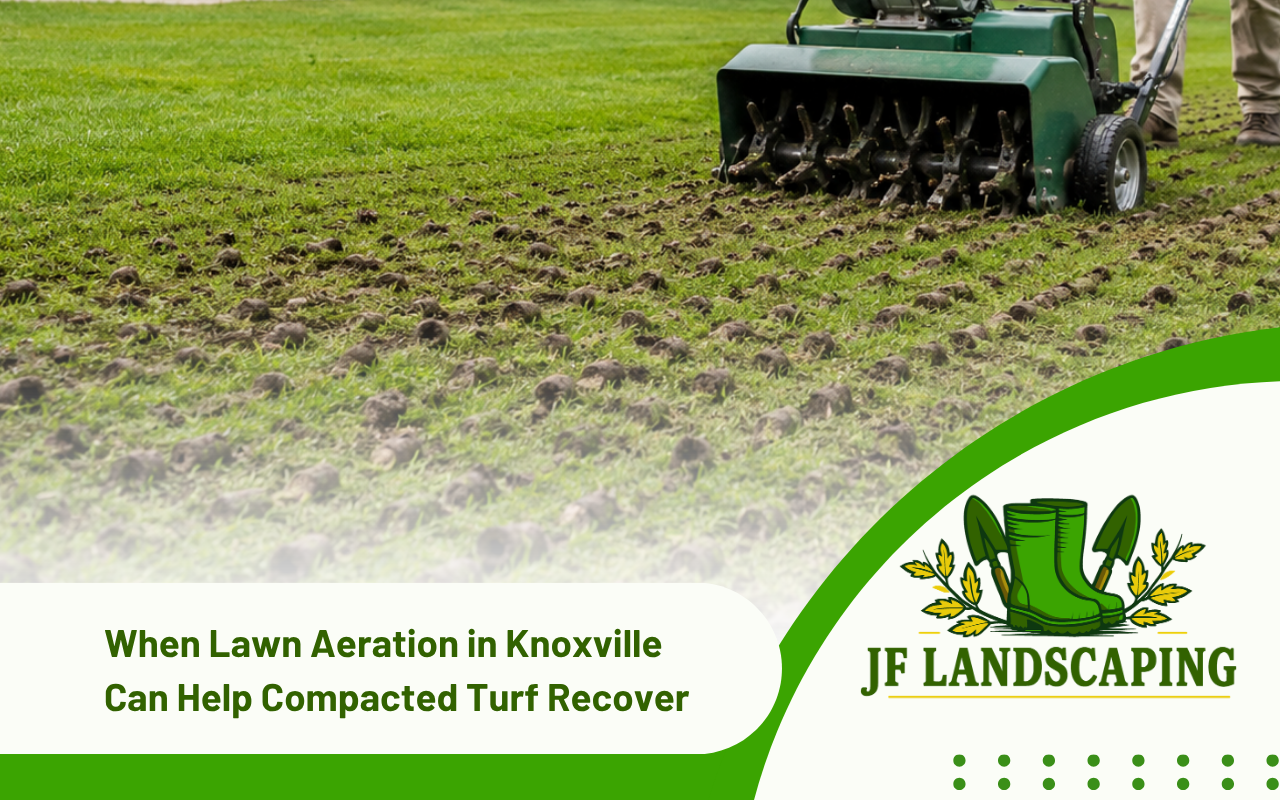
When Lawn Aeration in Knoxville Can Help Compacted Turf Recover
Lawns can look thin or stressed even when they receive regular mowing and watering because the problem may be below the surface. Professional lawn aeration in Knoxville can help relieve compaction, improve air movement, and create better pathways for water and nutrients to reach the root zone. Request your lawn assessment when turf feels hard, drains slowly, or struggles in high-traffic areas.
At JF Landscaping, we bring 13+ years of experience to residential and commercial lawn care, with free estimates and availability Monday through Friday from 7:00 a.m. to 7:00 p.m.
Start With a Compaction Check
Compacted soil has fewer open spaces for air and water. Foot traffic, pets, equipment, and repeated activity can gradually press soil particles closer together.
Try pushing a screwdriver into the soil in several locations. If it enters easily in one area but resists strongly in another, compaction may be uneven across the lawn.
Use Turf Symptoms as Supporting Evidence
Thin growth, standing water, hard soil, shallow roots, and worn paths can all suggest that compaction is affecting the turf. These signs should be evaluated together instead of relying on one symptom.
Time Aeration Around Active Grass Recovery
Schedule your lawn aeration when soil conditions and grass growth support recovery after the service. Timing should match the lawn type and seasonal conditions rather than a fixed calendar date.
Use our review fall lawn tips guide for additional seasonal planning.
Use an Aeration-Need Diagnostic Table
| Lawn Condition | What It May Mean | Aeration Value | Other Factor to Check | Next Step |
|---|---|---|---|---|
| Hard soil | Compaction | High | Traffic pattern | Evaluate aeration |
| Standing water | Slow infiltration | Moderate | Drainage problem | Check grade |
| Thin turf | Weak roots | Variable | Shade or fertility | Diagnose cause |
| Heavy thatch | Surface buildup | Moderate | Thatch depth | Combine strategies |
Use Core Aeration to Open the Root Zone
Core aeration removes small plugs of soil and leaves openings that can improve gas exchange and water movement. The plugs typically break down naturally over time.
Use Fall Aeration as Part of a Larger Lawn Plan
For many lawns, fall provides an opportunity to combine aeration with overseeding or fertilization, depending on grass type and conditions. The treatments should be coordinated rather than scheduled independently.
Use Fertilization After Diagnosing the Soil
Fertilizer cannot solve compaction by itself. Improving root-zone conditions may help the lawn use nutrients more effectively.
For local fertilization support, visit our explore Knoxville lawn fertilization page.
Use Traffic Patterns to Prevent Compaction From Returning
Repeated foot traffic can quickly recreate hard zones. Redirecting paths, rotating play areas, and avoiding equipment on wet soil can help reduce recurring pressure.
Use Soil Moisture to Improve Aeration Conditions
Soil that is extremely dry can be difficult to aerate, while overly saturated soil can compact or smear. Moderate moisture generally supports cleaner core removal.
Use a Post-Aeration Care Sequence
- Leave soil cores to break down.
- Water according to lawn needs.
- Overseed if appropriate.
- Apply fertilizer only if needed.
- Limit heavy traffic during recovery.
Use a Maintenance Checklist to Protect Results
Routine mowing, irrigation, traffic control, and seasonal care can help maintain healthier soil conditions. Review our review lawn maintenance checklist for ongoing tasks.
Use Practical Lawn Care Between Services
Our team at JF Landscaping can help homeowners connect compaction, moisture, turf density, and seasonal timing before recommending aeration or related lawn treatments.
For additional ideas, see our review practical lawn tips guide.
Use Overseeding Only When It Fits the Lawn Type
Aeration can create useful soil openings, but overseeding should still match the grass type, season, and lawn goals. Adding seed without considering those factors can waste material or create inconsistent results.
Use Irrigation as Part of the Recovery Plan
After aeration, water should support root recovery without keeping the soil saturated. The exact schedule depends on weather, soil, and whether seed or fertilizer was applied at the same time.
Use a Before-and-After Soil Check
Compare infiltration and soil firmness several weeks after service. If water still ponds or hard areas remain unchanged, drainage, grading, or deeper soil problems may need attention.
Use Aeration as One Part of Long-Term Lawn Care
Healthy turf also depends on mowing height, irrigation, fertility, sunlight, and traffic. Aeration works best when it addresses a real compaction problem inside a broader maintenance plan.
Use Lawn Traffic as a Long-Term Maintenance Variable
Play areas, pet routes, and common walking paths often compact faster than the rest of the lawn. If the same zones repeatedly decline, changing traffic patterns may be just as important as repeating aeration.
Tracking these areas helps determine whether the treatment is solving the cause or only providing temporary relief.
Recheck compacted areas after recovery and compare them with healthier sections of the lawn.
That comparison can help determine whether future aeration should focus on the entire lawn or only high-pressure zones.
Frequently Ask Questions
How do I know my lawn is compacted?
Hard soil, thin turf, poor infiltration, worn paths, and shallow roots are common signs.
Does aeration help every lawn?
Not always. The value depends on soil compaction, turf condition, grass type, and other underlying problems.
Should soil cores be removed?
Usually no. Cores can break down naturally and return organic material to the surface.
Can I fertilize after aeration?
Yes when fertilization is appropriate, but nutrient needs should be considered separately from compaction.
How often should aeration be done?
Frequency depends on soil type, traffic, lawn condition, and how quickly compaction returns.
Improve the Root Zone Before Expecting Better Turf
Well-timed lawn aeration in Knoxville can support stronger roots by reducing compaction and improving movement of air and water. Book your lawn assessment with JF Landscaping for practical recommendations and a free estimate.