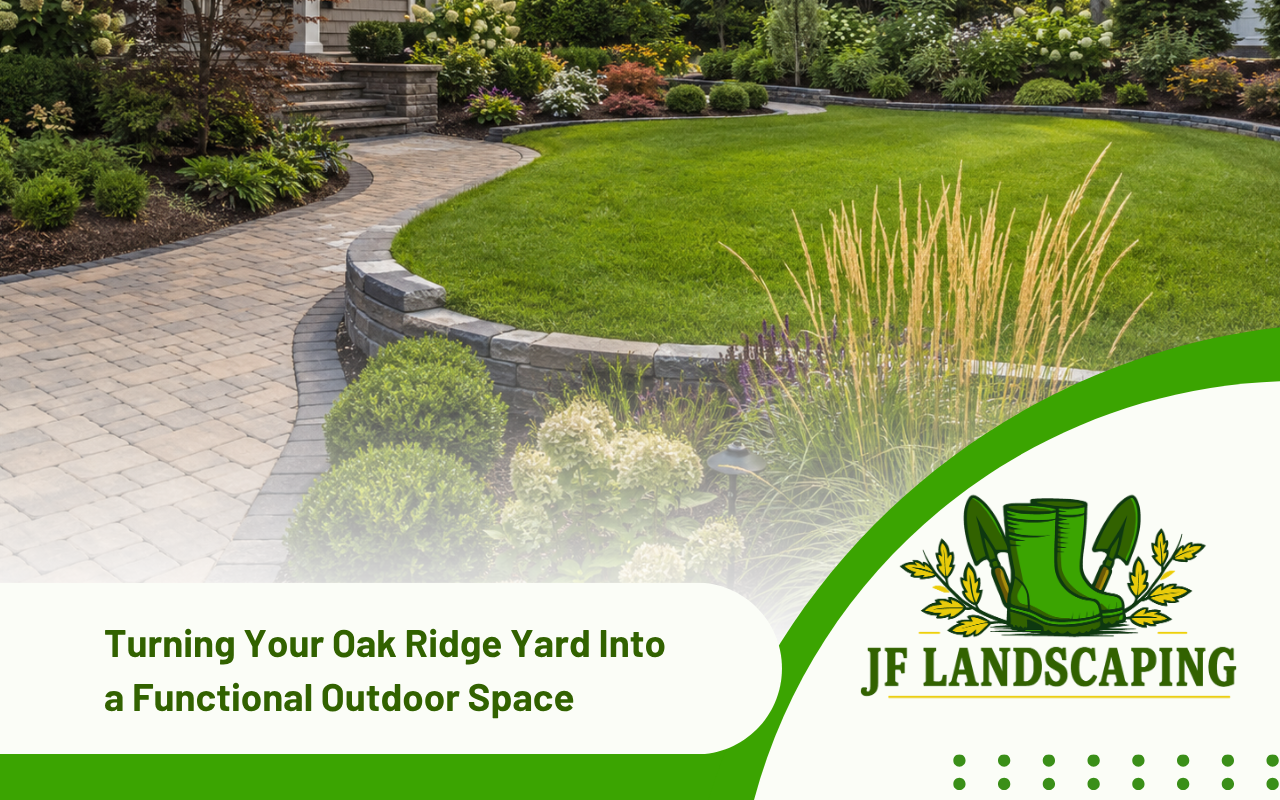
Turning Your Oak Ridge Yard Into a Functional Outdoor Space
A good landscape should feel intentional from the driveway to the backyard, with plants, hardscaping, lawn areas, and gathering spaces working together. Professional landscape design in Oak Ridge helps homeowners organize those elements around the property’s slope, sunlight, drainage, and daily use. Request your design consultation when you want a clearer plan before investing in materials or installation.
At JF Landscaping, we bring 13+ years of experience to residential and commercial landscape projects, with free estimates and availability Monday through Friday from 7:00 a.m. to 7:00 p.m.
Begin With Problems Before Adding Features
Strong design starts by identifying what is not working. Poor drainage, weak curb appeal, limited shade, awkward access, overgrown beds, or unused lawn areas can all shape the project priorities.
Listing these issues first helps prevent decorative features from being added before the basic layout is solved.
Use Property Zones to Organize the Design
Divide the landscape into entry, social, service, play, planting, and transition areas. Each zone should have a clear purpose and should connect logically with the next.
This method makes complex properties easier to plan because each area can be evaluated separately without losing the overall flow.
Use Drainage and Grade as Fixed Design Inputs
Schedule your landscape planning when slopes, runoff, or low areas affect how the yard can be used. Drainage should be addressed early because it can influence patios, beds, walkways, and plant selection.
For structural outdoor features, visit our explore Oak Ridge hardscaping page.
Use a Landscape Priority Map
| Zone | Primary Goal | Design Constraint | Useful Feature | Planning Priority |
|---|---|---|---|---|
| Front yard | Curb appeal | Driveway and entry | Layered planting | High |
| Backyard | Outdoor living | Privacy and shade | Patio or seating | High |
| Side yard | Access | Narrow space | Walkway or screening | Medium |
| Service area | Utility | Equipment access | Durable surface | Medium |
Use Sightlines to Improve Curb Appeal
Views from the street, front door, patio, and major windows should influence plant placement and hardscape alignment. A strong design guides attention toward important features instead of allowing clutter to dominate.
Use Plant Layers Instead of Random Placement
Combining groundcovers, perennials, shrubs, and small trees creates depth. Plant size at maturity should guide spacing so beds do not become overcrowded after a few seasons.
Use Backyard Design to Support Real Activities
A backyard intended for entertaining needs different priorities than one used for pets, children, gardening, or quiet relaxation. The layout should reflect how the household actually uses the property.
Use Hardscape to Define Movement
Walkways, patios, walls, and edging can create structure and reduce uncertainty about how guests move through the yard. These features should support the landscape rather than overpower it.
Use Design Trends Selectively
Trends can provide useful inspiration, but they should fit the site and maintenance goals. Review our review latest landscape trends guide for ideas that can be adapted thoughtfully.
Use a Phased Plan When the Project Is Large
- Correct drainage and grading.
- Install major hardscape.
- Build planting beds.
- Add trees and shrubs.
- Install smaller plants.
- Finish with mulch and details.
Use Past Projects to Clarify Your Style
Reviewing completed work can help homeowners communicate what they like. Visit our explore our project portfolio page for visual references.
Use Service Scope to Build a Complete Plan
Our team at JF Landscaping can help coordinate design, hardscaping, planting, and maintenance priorities so each stage supports the final result.
See our review complete landscaping services page for broader options.
Use Maintenance Tolerance to Guide Plant Selection
Some homeowners enjoy seasonal pruning and frequent bed care, while others prefer lower-maintenance plants and simpler layouts. The design should match the amount of ongoing work the property owner realistically wants to manage.
Use Seasonal Interest to Avoid a One-Season Landscape
Mix plants with different bloom times, foliage textures, and winter structure so the yard does not peak for only a few weeks. A balanced plan can provide interest through more of the year without relying on constant replanting.
Use Utility Areas as Part of the Design
Trash storage, HVAC units, hose access, gates, and service paths still need to function. Screening can improve appearance, but the design should preserve access for maintenance and repairs.
Use a Final Design Review Before Installation
Before work begins, review dimensions, materials, plant sizes, drainage, access, and maintenance expectations together. This final check helps identify conflicts while they are still easy to adjust.
Use Lighting and Evening Use in the Plan
Outdoor spaces can feel very different after sunset. If the yard will be used in the evening, consider pathway lighting, patio illumination, and darker corners before plants and hardscape are finalized.
Planning lighting early can also reduce later disruption to finished beds or paved areas.
Review the final plan from both street and backyard viewpoints before installation starts.
Landscape Design FAQs
What should be planned first?
Start with drainage, grading, access, and major use areas before selecting plants or decorative features.
How can a small yard feel larger?
Clear pathways, layered planting, controlled color, and defined zones can make small spaces feel more organized.
Should every area be planted?
No. Open space, lawn, hardscape, and planting should be balanced around how the property is used.
Can landscaping be installed in phases?
Yes. A master plan allows major work to be completed in stages without losing design consistency.
Why does mature plant size matter?
Plants spaced only by their current size can become crowded, block views, or require excessive pruning later.
Turn Individual Yard Ideas Into One Cohesive Plan
Thoughtful landscape design in Oak Ridge should connect function, drainage, plant growth, hardscape, and long-term maintenance. Book your design consultation with JF Landscaping for a practical plan and free estimate.