Expert Tips on Lawn Leveling
An uneven yard can make mowing harder, collect standing water, and leave grass looking thin or patchy. A careful leveling plan can create a smoother surface while supporting healthier roots, better seed contact, and long-term sod health.
At JF Landscaping, we use practical lawn leveling methods to correct surface problems without making the process more complicated than it needs to be. This guide explains what causes bumps and dips, how to choose the right repair method, and how to protect the lawn after the work is complete.
What Causes an Uneven Lawn?
Lawns become uneven for several reasons. Soil can settle after construction, heavy rain, or underground repairs. Tree roots may lift sections of turf, while foot traffic and equipment can compact other areas. Animals, erosion, and poor soil preparation can also create small holes, raised patches, or soft areas.
A bumpy lawn fix should begin with the cause, not only the visible surface. Filling a dip without correcting water flow may lead to another low area later. Raised soil caused by roots may also need a different approach than soil that has settled around a walkway or drainage path.
How Lawn Leveling Improves Daily Yard Care
A smooth surface makes routine maintenance easier. Mower wheels move more evenly, blades are less likely to cut into high spots, and water can spread across the yard with fewer puddles. Lawn leveling also improves the way seed, fertilizer, and soil treatments reach the grass.
Our team at JF Landscaping understands that appearance is only part of the goal. An even lawn can feel safer underfoot and reduce sudden dips that may cause trips. It can also create better conditions when you prepare for overseeding because new seed has more consistent contact with the soil.
Tools and Materials for Smoother Results
The right tools depend on the depth and size of the uneven areas. Minor surface changes may need only a rake and light soil mix. Larger depressions often require more careful filling, compacting, and checking before the turf is placed back over the repaired area.
- A garden rake for loosening soil and spreading material
- A leveling rake for creating a more even surface
- A shovel and wheelbarrow for moving soil mixtures
- A straight board for checking high and low areas
- A garden hose for testing water movement
- Screened topsoil, sand, or a suitable soil blend
Choose material that works with the existing soil. Adding too much sand to certain clay soils may create a hard mixture instead of improving the surface. When possible, use screened material with a texture close to the soil already supporting the lawn.
Topdressing Methods for Minor Surface Problems
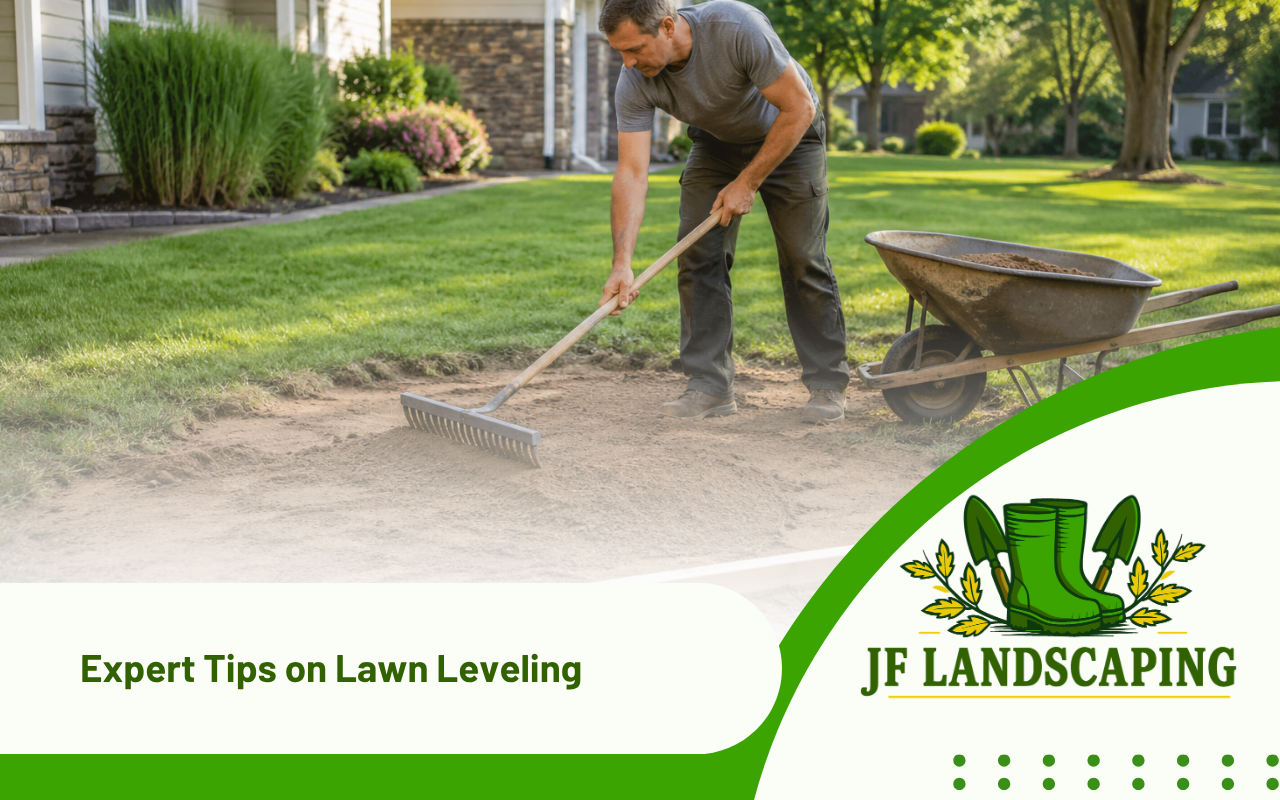
Topdressing lawn areas works well when the bumps and dips are shallow. Spread a thin layer of screened soil or a suitable soil blend across the turf. Use a leveling rake to move the material into small depressions while keeping most grass blades visible above the new layer.
With JF Landscaping, you receive guidance based on the condition of the yard rather than a one-method approach. Lawn leveling may require several light topdressing applications instead of one heavy layer. Adding too much material at once can cover the grass, slow growth, and create new surface problems.
Water the area lightly after spreading the mixture. This helps the material settle and reveals places that may still need attention. Allow the grass to grow through before applying another layer. Gradual correction is often safer for established turf than trying to remove every dip in one visit.
Steps to Level Low Spots Safely
Deeper depressions need more than surface topdressing. To level low spots without burying healthy grass, lift the existing turf when possible and add soil underneath it. This method keeps the grass layer intact while raising the soil base to match the surrounding yard.
- Mark each low area and check how deeply it sits below grade.
- Cut and lift the turf carefully, keeping the roots attached.
- Add screened soil in small layers and press it gently.
- Replace the turf and match it with the nearby surface.
- Water lightly and check the area again after settling.
A repaired area may settle during the following weeks. Check it after rain or irrigation and add a small amount of material when needed. Avoid building the spot too high, since raised turf can scalp during mowing and may redirect water toward another part of the yard.
Drainage and Overseeding After Surface Correction
Drainage leveling focuses on how water moves across the yard after the surface has been corrected. A smooth lawn should guide water away from buildings and prevent it from collecting in shallow basins. Surface correction alone may not solve problems caused by compacted soil or an unsuitable slope.
- Run water across repaired areas and watch for slow drainage.
- Check whether soil slopes toward foundations or hard surfaces.
- Aerate compacted areas when water cannot enter the soil.
- Add seed only after the surface has settled and stabilized.
- Keep new seed moist without creating puddles or runoff.
Leveling can also prepare for overseeding by improving seed-to-soil contact. Mow the grass slightly shorter, remove loose debris, and spread seed evenly over the corrected surface. Follow the watering needs of the grass type and limit heavy traffic until new roots become established.
Frequently Asked Questions
Can I level a lawn without removing the grass?
Yes, shallow uneven areas can often be corrected with light topdressing. Keep the layer thin enough for grass blades to remain exposed. For deeper areas, lifting the turf may give better results. Our guide to proper sod installation practices also explains why good soil contact matters.
What is the best time to level an uneven lawn?
The best period is usually when the grass is actively growing and can recover from light stress. Avoid working on frozen, very dry, or waterlogged soil. Timing may vary by grass type, so consider local growing conditions before beginning a large Oak Ridge leveling project.
Will leveling help with standing water?
It can help when water collects because of small surface depressions. However, repeated standing water may also point to compacted soil, poor grading, or a drainage problem below the surface. For advice about the right next step, use our lawn drainage contact page.
How much topdressing should I apply at one time?
Use a light layer that settles between the grass blades without covering them. Deep dips should be repaired in stages or filled beneath lifted turf. At JF Landscaping, we consider grass condition, soil type, and the depth of each area before recommending a surface correction method.
Should I overseed immediately after leveling?
You can overseed after the soil has settled and the surface feels stable. Seed needs close contact with the soil and steady moisture during germination. Before planting, review ways to support lasting lawn growth through proper watering and care.
Build a Smoother Lawn in Oak Ridge
A level yard can improve mowing, drainage, seed preparation, and the overall look of your outdoor space. Start by identifying the cause, choose a repair method based on the depth of the problem, and make gradual corrections that protect the existing grass.
When you choose JF Landscaping, we can help you evaluate uneven areas and plan a practical path toward a smoother lawn. Use our contact page to discuss lawn leveling in Oak Ridge and the surface problems affecting your yard.