
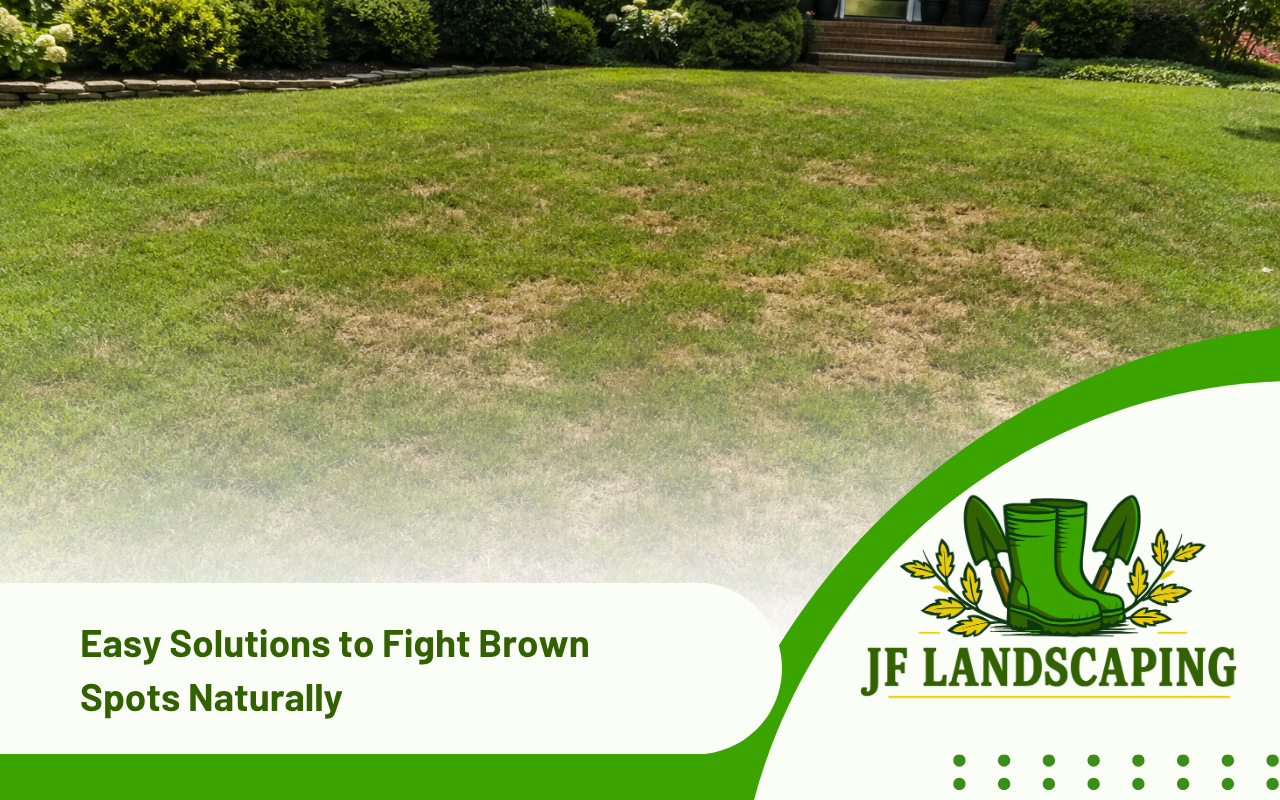
Easy Solutions to Fight Brown Spots Naturally
Finding common lawn care mistakes can be the first step toward restoring a healthier yard. Brown areas may come from drought, fungus, poor soil, pet activity, mowing habits, or uneven irrigation.
At JF Landscaping, we encourage homeowners to study the pattern before choosing a treatment. A calm inspection can reveal whether the grass needs more water, better drainage, disease control, or focused repair.
Common Causes Behind Discolored Lawn Areas
Lawn brown patches rarely appear without a reason. Hot weather can dry exposed areas, while low sections may stay wet long enough for fungal growth. Compacted soil can also prevent water, oxygen, and nutrients from reaching the roots.
Other causes include dull mower blades, cutting the grass too short, fertilizer burn, pet urine, insects, and buried construction material. Brown spots near sidewalks or driveways may develop faster because concrete holds heat and dries nearby soil.
Before treating the area, compare it with healthy parts of the yard. Notice the shape, location, soil condition, and recent weather. These details can reduce guesswork and prevent treatments that make the problem worse.
Clues to Check During Your Lawn Inspection
A close inspection can help separate disease signs from environmental stress. Walk through the lawn during the morning and afternoon because moisture, color, and blade condition can change throughout the day.
- Look for round rings, reddish borders, white growth, or web-like material.
- Check whether the grass feels dry and crisp or soft and damp.
- Push a screwdriver into the soil to identify hard, compacted areas.
- Compare sunny, shaded, sloped, and low-lying parts of the yard.
- Review sprinkler coverage for dry corners or areas receiving too much water.
- Gently pull the damaged grass to check whether the roots remain secure.
Our team at JF Landscaping recommends recording what you see before making changes. Photos taken several days apart can show whether the affected area is spreading, improving, or staying limited to one location.
Is It Fungus or Drought Stress?
The fungus vs drought question often becomes clearer after checking moisture and damage patterns. Drought stress usually affects sunny, windy, or elevated areas first. The grass may look blue-gray before turning tan, and footprints may remain visible after someone walks across it.
Fungal damage often develops where grass remains wet for long periods. Some lawn diseases form circles, rings, or irregular patches that expand. Fine white growth may appear early in the morning, especially after humid nights or heavy dew.
Water a small test area deeply and monitor it for several days. Drought-stressed turf may begin to recover when moisture reaches the roots. Grass affected by disease may remain weak or continue spreading despite adequate water.
Watering and Soil Problems That Weaken Grass
Watering mistakes can create both dry turf and disease-friendly conditions. Light daily sprinkling keeps roots near the surface, where they dry quickly during hot weather. Evening irrigation can leave blades wet overnight and support fungal activity.
Deep morning watering is usually more helpful than frequent shallow watering. However, the correct schedule depends on rainfall, soil type, shade, grass variety, and drainage. Check the soil before adding water instead of relying only on a fixed timer.
Soil problems can also cause Knoxville lawn spots. Compacted clay may block root growth, while low areas can collect water. A soil test can identify pH or nutrient concerns without relying on guesswork. With JF Landscaping, you can focus on the conditions affecting your specific yard.
Practical Steps for Damaged Patch Repair
Patch repair should begin only after the original cause is under control. Adding seed or sod without fixing irrigation, drainage, disease, or soil compaction may lead to the same damage returning.
- Remove loose, dead grass without digging deeply into healthy roots.
- Loosen the top layer of soil to improve seed-to-soil contact.
- Add a light layer of clean compost when the soil needs better structure.
- Select seed or sod that matches the surrounding lawn and site conditions.
- Keep the repaired area evenly moist while new roots become established.
- Limit foot traffic until the new grass is strong enough for normal use.
When damage is broad or the existing turf does not match the site, professional evaluation may help. When you choose JF Landscaping, we review the lawn conditions before discussing a repair approach.
Simple Habits That Reduce Future Lawn Damage
Healthy grass can handle heat, brief dry periods, and normal wear more effectively. Regular maintenance also makes new problems easier to notice before they spread across the yard.
- Mow at a suitable height and avoid removing too much grass at once.
- Keep mower blades sharp to create clean cuts that heal faster.
- Water early enough for the blades to dry during the day.
- Adjust irrigation after rainfall instead of following the same schedule.
- Aerate compacted areas when soil prevents normal water movement.
- Clear thick leaves and debris that trap moisture against the grass.
- Use fertilizer according to soil needs and product directions.
Seasonal care should respond to current lawn conditions rather than a one-size-fits-all routine. A consistent inspection schedule can catch moisture problems, thinning grass, weeds, and early disease signs before major patch repair becomes necessary.
Frequently Asked Questions
Why did brown areas appear after several hot days?
Heat can dry the soil faster than expected, especially near pavement, slopes, or sunny walls. Check moisture several inches below the surface before watering. Deep irrigation may help when the roots are dry, but frequent light watering can keep the root system shallow.
Can too much water create lawn brown patches?
Yes. Excess water can reduce oxygen around the roots and create conditions that support fungus. Review sprinkler timing, drainage, and rainfall. Our guide to lawn care mistakes in Knoxville explains other habits that may weaken turf.
Should I reseed a damaged area immediately?
First identify and correct the cause. Seed may fail when the soil remains compacted, soggy, dry, or affected by active disease. Seasonal timing also matters, so review these fall lawn care tips before planning a repair.
When is sod a better option than seed?
Sod may be useful when a bare area needs faster coverage or when erosion makes seed establishment difficult. Site preparation remains important. Explore our information about sod installation in Knoxville to understand the process.
Do all spreading patches mean the lawn has fungus?
No. Spreading damage may also come from insects, irrigation gaps, pet activity, chemical spills, or poor soil. Fungus often has visible borders or growth during damp conditions, but a professional inspection may be needed when the cause remains unclear.
Get Clear Answers for Your Knoxville Lawn
Solving brown spots starts with the right diagnosis. Study the pattern, check soil moisture, review recent care, and avoid applying products until you understand the likely cause. Small changes in watering, mowing, drainage, or soil care may support gradual recovery.
At JF Landscaping, we take a practical approach to lawn concerns throughout the Knoxville area. Use our contact page to share what you are seeing and discuss the next step for your yard.