
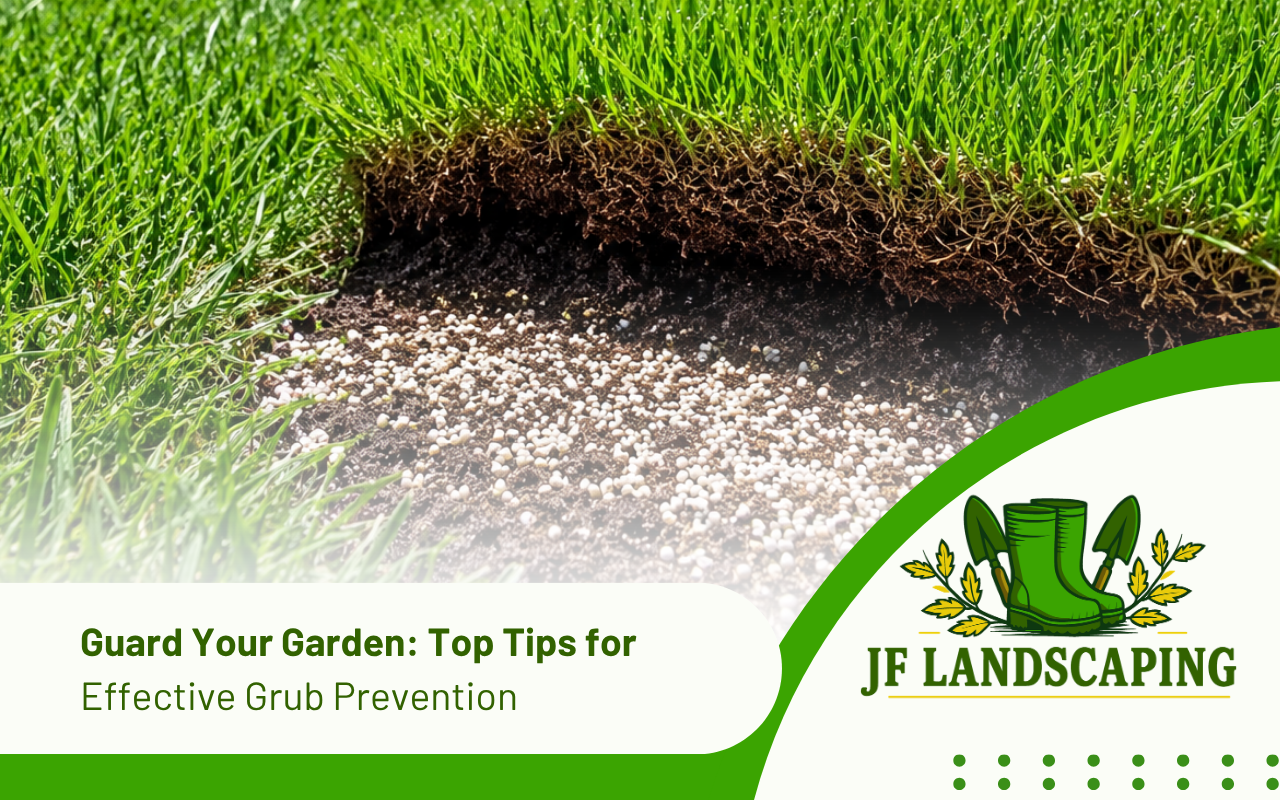
Guard Your Garden: Top Tips for Effective Grub Prevention
Healthy grass starts below the surface. When lawn grubs feed on roots, your yard can lose color, strength, and thickness fast. At JF Landscaping, we help homeowners understand grub prevention as part of a smart seasonal lawn plan, including simple steps from our fall lawn care tips.
Grubs are small, but their impact can be easy to see. Brown spots, soft turf, and digging animals may all point to trouble under the soil. Knowing what to look for helps you act before the damage spreads.
Understanding What Grubs Do Beneath Your Lawn
Grubs are beetle larvae that live in the soil and feed on grass roots. Common types include Japanese beetle larvae, June beetle larvae, and similar white grubs. They often curl into a C shape and stay hidden until grass begins to show stress.
As roots weaken, the lawn cannot take in water or nutrients well. This can leave areas thin, dry, or loose. In Knoxville, warm soil during summer can support grub activity, so regular lawn checks are an important part of care.
Early Grub Damage Signs to Watch For
Grub damage signs often begin small, then grow wider if the root system keeps breaking down. With JF Landscaping, you can better understand which symptoms need attention and which may come from other lawn issues.
- Brown patches that spread even when the lawn gets enough water.
- Spongy turf that feels soft when you walk across it.
- Grass that lifts easily because roots have been chewed.
- Birds, skunks, or raccoons digging in the yard.
- Thinning areas near flowerbeds, edges, or sunny turf sections.
What Causes Brown Patches in Healthy Grass?
Brown patches causes can include heat stress, poor watering, compacted soil, pet spots, disease, or lawn grubs. That is why checking the roots matters. If the grass lifts like a loose mat, grubs may be feeding below the surface.
Other lawn issues can look similar, so avoid guessing too quickly. A soil check, root inspection, and review of watering habits can help narrow the cause. For lawns that need a bigger recovery plan, our sod installation in Knoxville service may be useful after the pest issue is controlled.
Best Grub Treatment Timing for Knoxville Lawns
Grub treatment timing matters because young grubs are easier to control than mature ones. In many lawns, treatment is most useful during summer when larvae are small and close to the root zone. This is also when prevention can limit damage before fall stress arrives.
Grub prevention in Knoxville should be planned around local weather, soil moisture, and turf condition. Dry soil can reduce product movement, while overly wet soil can create uneven results. Proper timing supports stronger results and lowers the risk of unnecessary treatments.
Practical Lawn Care Habits That Reduce Grubs
A strong lawn is harder for pests to damage. Thick turf, deep roots, and healthy soil help grass recover faster when stress appears. At JF Landscaping, we focus on routine care that supports the lawn before problems become costly.
- Mow at a height that protects the crown of the grass.
- Water deeply, but avoid frequent shallow watering.
- Aerate compacted soil when the lawn needs better airflow.
- Remove heavy thatch that can shelter pests.
- Use soil-based fertilization instead of guessing what the lawn needs.
Planning care around a clear budget also helps homeowners stay consistent. Our guide to a lawn care budget explains how steady maintenance can support better long-term results.
Smarter Lawn Pest Control Options for Your Yard
Lawn pest control should fit the lawn, the season, and the level of activity found in the soil. A balanced plan may include monitoring, cultural care, and targeted treatment when needed. This keeps the focus on results, not guesswork.
- Inspect problem areas before choosing a treatment method.
- Use preventive products only when timing and conditions are right.
- Consider beneficial nematodes when a natural option fits the lawn.
- Keep the turf dense to make egg laying less attractive.
- Follow product directions carefully if treatment is needed.
Frequently Asked Questions
How do I know if I have lawn grubs?
You may see brown patches, loose turf, or animals digging at night. Lift a small section of damaged grass and check the soil. If you see white C-shaped larvae, grubs may be present. For seasonal prevention tips, visit our fall lawn care guide.
Can grub damage be repaired?
Yes, many lawns can recover when the pest issue is handled and the grass receives proper care. Thin areas may need seeding, soil improvement, or new sod. For severely damaged sections, our Knoxville sod installation service can help restore the yard after grubs are under control.
When should I start grub prevention?
Start before damage becomes visible. Summer is often the key window because young grubs are closer to the surface. The right schedule can depend on weather, soil moisture, and your lawn’s past pest activity.
Are brown patches always caused by grubs?
No. Brown patches can also come from drought, disease, poor soil, pet urine, or mowing stress. A root check helps confirm whether grubs are involved. If you need help planning next steps, you can contact our team.
Does regular lawn care help prevent grubs?
Yes. Strong roots and healthy soil can make your lawn more resistant to pest damage. Good mowing, proper watering, and seasonal care reduce stress, which helps the grass handle pressure from pests and weather.
Protect Your Knoxville Lawn Before Grubs Spread
Grub prevention works best when it starts early and fits the real condition of your yard. When you choose JF Landscaping, we look at your lawn’s needs, the season, and the signs you are seeing before guiding the next step.
Do not wait for small brown spots to turn into large damaged areas. For help with grub prevention in Knoxville, reach out through our contact page and protect your lawn before root damage spreads.