
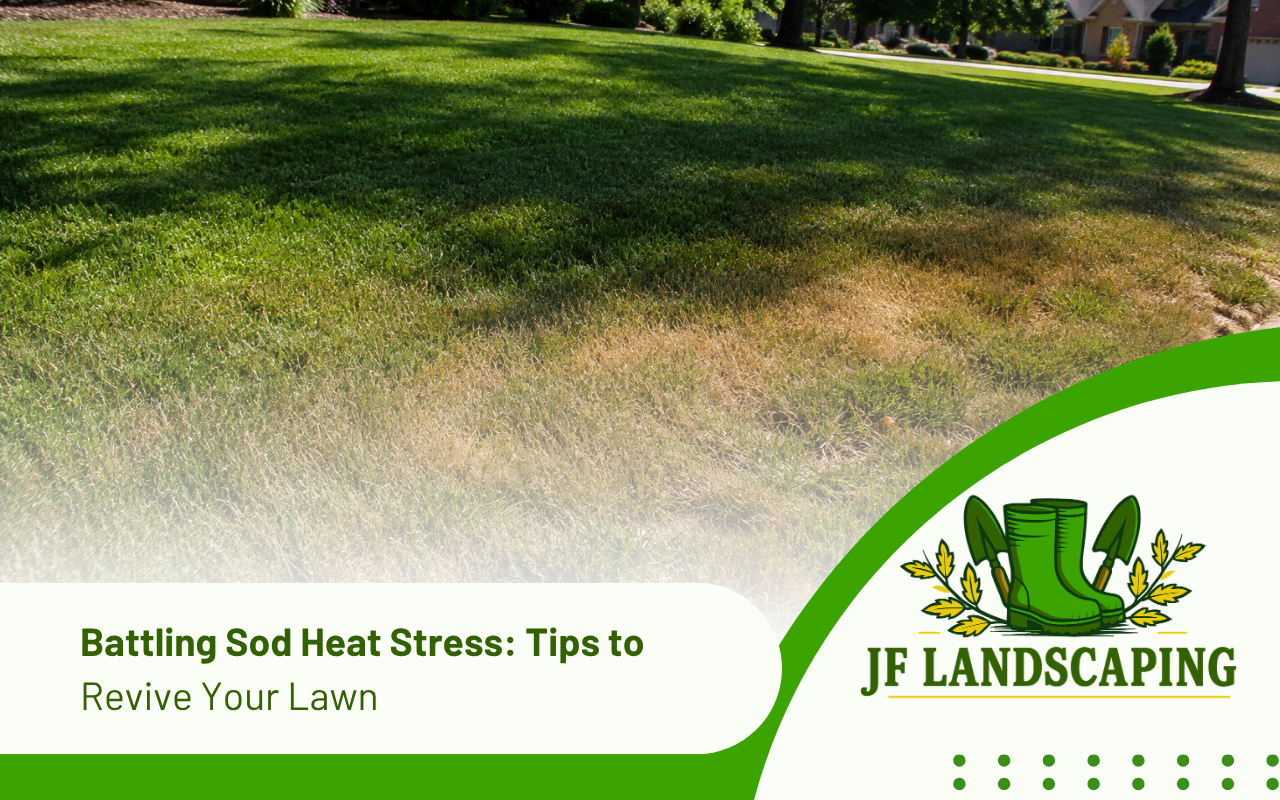
Battling Sod Heat Stress: Tips to Revive Your Lawn
Summer heat can turn healthy sod into a weak, dry lawn, especially when soil dries faster than roots can absorb water. If you are dealing with sod heat stress, the goal is not quick color. The goal is root recovery. For longer-term care, review our guide on improving sod longevity.
At JF Landscaping, we see many Knoxville lawns struggle after several hot, dry afternoons in a row. The right response depends on what the grass is showing, where the damage appears, and how recently the sod was installed.
Read the Lawn Before You React
A heat stress lawn often gives warning signs before it turns brown. The first clue is usually a dull blue-green or gray tone. Grass blades may fold inward, and footprints may stay visible after you walk across the lawn.
Our team at JF Landscaping looks at patterns across the yard, not just color. A sunny slope, a strip beside concrete, or a spot near a driveway may dry out faster than shaded areas. These details help you decide whether the lawn needs deeper watering, less mowing, or better protection from reflected heat.
Common Signs of Sod Heat Stress
Sod wilting does not always mean the grass is dying. It often means the blades are trying to save moisture. The roots may still be alive, but they need steady care before the stress spreads.
- Blades fold, curl, or feel crisp at the tips.
- Footprints or mower lines remain visible after use.
- Grass turns pale yellow, tan, or straw-colored.
- Edges near sidewalks, patios, and driveways dry first.
- New sod feels loose because roots have not anchored well.
Here is a simple field test: pull gently on a stressed corner. If the sod lifts easily, roots may be shallow or dry. If it resists, the root system still has hold and may recover with better moisture.
When Should You Water Heat-Stressed Sod?
Watering during heat should focus on the root zone, not only the surface. Early morning is best because less water is lost to sun and wind. The soil should become moist several inches deep, so roots can grow downward instead of staying near the surface.
A useful example is a lawn that looks wilted by 3 p.m. every day. That does not mean it needs a quick afternoon spray. It may need a longer morning soak. For Knoxville-specific care habits, see our guide on lawn care mistakes to avoid in Knoxville.
Water Deeply Without Creating New Problems
Too much water can harm stressed sod, especially when the soil stays soggy overnight. The best approach is deep, even watering followed by time for the soil to breathe. Shallow daily watering can train roots to stay near the surface, where heat is strongest.
Use a screwdriver test to check moisture. Push a screwdriver into the soil after watering. If it slides in several inches with little resistance, moisture is reaching the root zone. If it stops quickly, the lawn may need slower watering or better coverage.
Mowing Choices That Reduce Summer Damage
Mowing in heat should be gentle. Cutting grass too short removes shade from the soil and increases water loss. A taller blade protects the crown of the plant and helps the lawn handle hot weather better.
- Raise the mower height during hot, dry weeks.
- Never remove more than one-third of the blade.
- Mow when the lawn is dry, but not heat-wilted.
- Keep mower blades sharp to avoid torn grass tips.
- Pause mowing if the lawn looks weak or flattened.
With JF Landscaping, homeowners get care advice based on the condition of the lawn, not a fixed calendar. During a heat wave, skipping one mowing can be better than forcing a cut that slows lawn recovery.
Support Recovery Without Forcing Growth
When grass is stressed, heavy fertilizer is not the answer. Fast top growth needs more water, and that can make the lawn work harder. During extreme heat, the safer goal is root support and steady recovery.
If the lawn is newly installed, check whether the roots are bonding with the soil before feeding. New sod that has not rooted well needs moisture management first. Our sod installation in Knoxville page explains why proper soil contact matters from day one.
Frequently Asked Questions
Can brown sod come back after heat stress?
Sometimes, yes. If the roots and crowns are alive, the grass can recover with deep morning watering, reduced traffic, and higher mowing. If the sod lifts easily and roots are dry or brittle, some areas may need repair.
How do I know if I am watering enough?
Check the soil, not just the grass blades. After watering, the soil should feel moist several inches down. For more practical care steps, visit our sod longevity tips.
Should I water every day during a heat wave?
Not always. New sod may need more frequent moisture checks, but established lawns usually do better with deep watering instead of light daily sprays. Soil type, shade, slope, and sun exposure all matter.
Why does my Knoxville lawn dry near concrete first?
Concrete and pavement hold heat and reflect it back onto nearby grass. These edge areas often need closer monitoring. Our guide to common Knoxville lawn care mistakes covers habits that can make these spots worse.
When should I get professional help?
Get help when dry patches keep spreading, sod stays loose, or watering does not improve the lawn after several care adjustments. You can contact our team for guidance based on your yard.
Build a Stronger Knoxville Lawn After Heat
Recovering from sod heat stress takes steady care, not rushed fixes. Deep watering, taller mowing, reduced traffic, and careful observation all help the roots regain strength. The most helpful lawn care plan starts with what the yard is actually showing.
At JF Landscaping, we help homeowners make practical choices during hot weather and after visible damage appears. If your Knoxville heat lawn problem keeps getting worse, reach out for lawn care support that fits your lawn, soil, and season.