
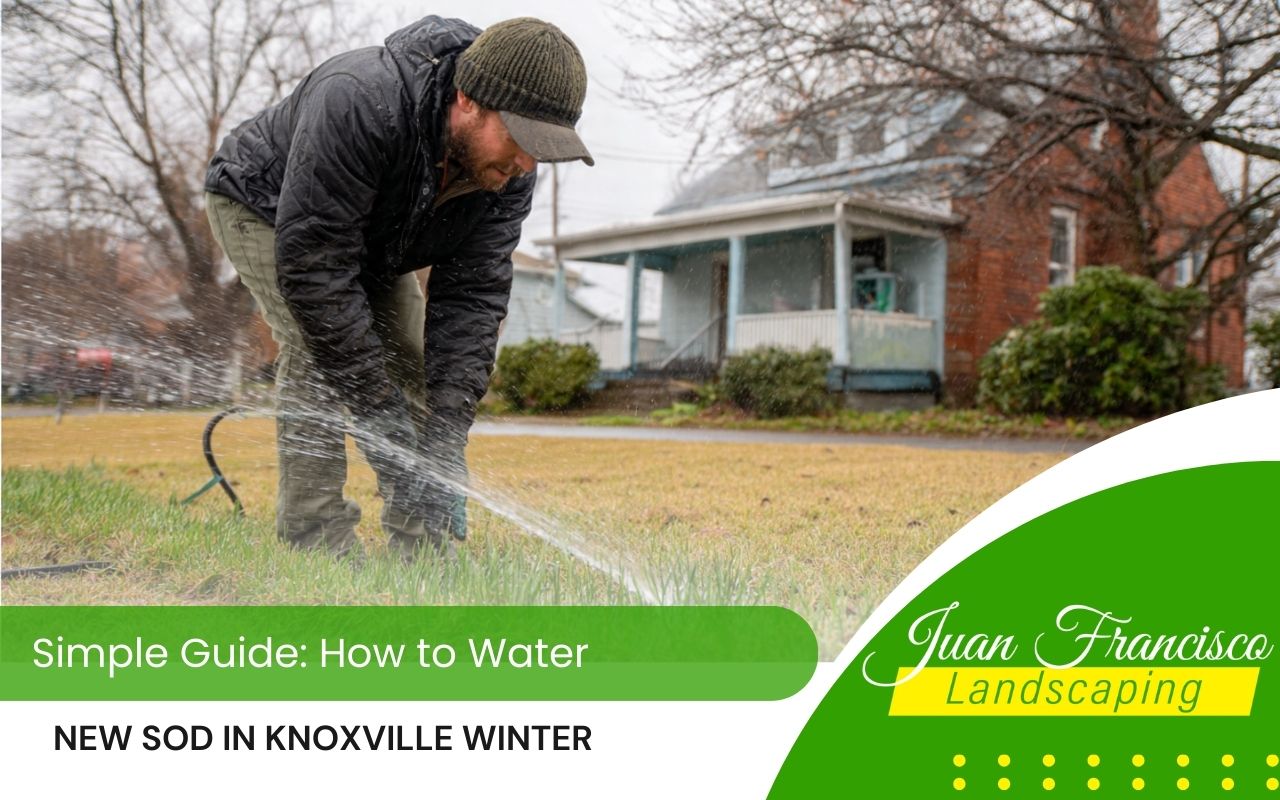
Simple Guide: How to Water New Sod in Knoxville Winter
How to Water New Sod in Knoxville Winter is key if you want your lawn to stay green and strong. Cold nights, changing daytime temperatures, and new roots make winter watering feel confusing. However, with a clear plan, you can protect your grass and avoid common mistakes that lead to dry or soggy sod.
New roots need time, steady moisture, and good soil contact to grow well. During winter, watering too much or too little can hurt your lawn. This guide explains when and how to water, what tools to use, and how to read weather and soil conditions. By the end, you will feel confident caring for your new sod.
Understanding How to Water New Sod in Knoxville Winter
New sod in Knoxville winter faces two main risks. It can dry out from cold wind, or become soaked from rain and melting frost. Overnight, soil often freezes and then thaws during the day. This cycle can stress shallow roots if the ground is either too dry or too wet for long periods.
Your goal is to keep moisture reaching the roots without puddles sitting on top. Cold air holds less water, so your sod can lose moisture faster than you expect. At the same time, winter rain and frost can saturate the ground. Water slowly so it reaches about one to one and a half inches deep.
If you are still planning your yard, remember that proper watering starts with correct installation. For expert help from the beginning, consider professional sod installation in Knoxville so the soil and sod are ready for winter care.
Factors to Consider Before Watering Your New Sod
Before you turn on the hose, think about soil temperature, recent weather, and the type of grass you installed. Sod roots need soil warmer than about 40°F to use water well. When the ground is frozen, extra water sits on the surface or freezes below, which offers no real benefit to the lawn.
You can check the soil with a thermometer or a simple garden trowel. If the soil crumbles easily and feels cool but not rock hard, it is usually safe to water. Also, pay attention to rainfall and snowfall. When more than half an inch of rain falls in two days, you can usually skip an extra watering.
- Soil temperature at root level
- Rain, snow, and recent moisture
- Windy or very sunny winter days
- Grass type, such as fescue or rye
Different grasses have slightly different water needs and cold strength. Fescue, bluegrass, and rye may all react differently to wet soil. Matching your plan to grass type helps new roots grow instead of only pushing out green blades. For long-term planning, also learn about the best timing for sod installation in your area.
Determining the Right Watering Schedule for Your Sod
A steady schedule makes winter watering much easier. Try watering in the early morning, when temperatures start to rise but before the ground warms too much. This timing lowers the risk of ice at night while giving the sod time to drink. Usually, two or three light waterings each week work better than a single deep soak.
As you plan your weekly routine, remember that How to Water New Sod in Knoxville Winter is about gentle, steady moisture. Light sessions help keep the soil evenly damp without runoff. Adjust the schedule based on real conditions. In warmer stretches, you may water a bit less often but slightly longer. During very cold spells, shorten sessions or pause if frost covers the lawn.
Keeping a simple notebook or phone log helps a lot. Write down watering days, weather, and soil feel. Over time, you will see patterns, like how quickly your soil dries after wind or sunshine. Then, you can tweak your schedule to fit your yard instead of guessing each week.
Tools and Techniques for Properly Watering New Sod
The right tools help you water gently and evenly during winter. A soaker hose or drip system is very useful. These tools release water slowly along the ground, so it seeps into the soil without washing away topsoil or creating puddles. They are especially helpful on slopes, where fast water can run off quickly.
- Soaker hoses for slow, deep watering
- Drip irrigation for precise zones
- Low-pressure sprinklers with adjustable flow
- Timers to control watering length
If you use a sprinkler, choose one with gentle spray settings. Position it so it covers the sod but does not soak sidewalks or driveways. Run it only until you see a light sheen on the blades, then shut it off. Move the sprinkler in sections to avoid overwatering one area while another stays dry.
Signs of Overwatering and Underwatering to Watch For
Reading your sod’s appearance will help you adjust before big problems start. Overwatered sod often looks dark green and feels very soft under your feet. You might notice a musty smell early in the morning or see moldy patches. When roots sit in water for too long, grass can lift easily from the soil.
Underwatered sod looks different. The blades appear dull, sometimes with a blue-green shade and brown tips. The soil may pull away from the edges of each sod piece, leaving small gaps. Footprints can stay visible because the grass does not spring back. When you see these signs, change your schedule quickly so the damage does not spread.
Adjusting Watering Practices Based on Weather Conditions
Knoxville winter weather can shift quickly. One day may be sunny and mild, and the next can bring frost. On days just above freezing, follow your normal plan but shorten each session a little. This approach keeps roots moist without adding extra water that could later freeze when temperatures drop overnight.
On warmer days above about 45°F, the ground absorbs water more easily, so you can water slightly deeper. During heavy rain or snow, skip watering completely. After snow melts, allow the ground a day or two to drain naturally before watering again. Always check soil with your hand or a small tool before turning on the hose.
Importance of Soil Type and Drainage in Watering New Sod
Your soil type greatly affects how often you should water. Sandy soil drains very fast, so water moves through quickly and roots can dry sooner. Clay soil holds water longer and can become soggy if you water too often. Loamy soil sits in the middle, holding moisture while still letting extra water drain away.
Checking and Adapting Your Soil
To test drainage, dig a small hole and fill it with water. If it drains within an hour, your soil is sandy. If it takes many hours, it is likely clay. For sandy soil, water a bit more often but keep each session shorter. For clay soil, water less often, but let each watering last longer to reach deeper roots.
If your yard has heavy clay, consider improving drainage over time by mixing in compost or other organic matter before laying sod. Better drainage helps prevent standing water during winter and supports stronger roots in every season.
Additional Care Tips to Ensure the Health of Your New Sod
Watering is important, but other winter habits matter too. Try to keep foot traffic low during the first few weeks so new roots can grab the soil firmly. Avoid fertilizing until spring, when the grass becomes more active. Fertilizer during winter dormancy can stress young roots instead of helping them grow.
- Limit walking on new sod
- Delay fertilizer until spring growth
- Gently clear leaves and debris
- Hand-pull weeds that appear
Remove fallen leaves and other debris because they can trap moisture and invite fungus. A light broom or leaf blower works better than heavy raking on new sod. If you like to plan ahead, look into essential tips for fall lawn care so your lawn enters winter in its best shape.
Troubleshooting Common Watering Issues with New Sod
Even with a careful plan, some spots may struggle. If patches are not rooting after about two weeks, check the soil. When it feels dry and crumbly, slowly increase watering. When it feels soaked and sticky, cut back or spread out your sessions. Letting the surface dry slightly between waterings helps protect roots.
If some areas stay thin or pale, the issue may be soil compaction. Try pushing a screwdriver into the ground. If it is hard to push in, the soil may be too tight. Gently aerate those spots with a metal spike or core aerator, then water lightly so moisture reaches the roots instead of sitting on top.
Frequently Asked Questions
How often should I follow How to Water New Sod in Knoxville Winter steps?
Most Knoxville lawns with new winter sod do well with two or three light waterings each week. However, always adjust based on rainfall, soil type, and temperature. Sandy soil may need slightly more frequent watering, while heavy clay may need less. Check the soil often and change your schedule if it feels too dry or too wet.
Is it safe to water new sod when it might freeze overnight?
It can be safe if you water in the late morning and keep sessions short. This timing lets the soil absorb moisture before temperatures drop again. Never water when the soil is already frozen or when ice still sits on the grass. In those cases, wait until the ground softens before adding more water.
Should I water my new sod if it has snow on top?
No, you should not water when snow covers the lawn. The snow will slowly melt and provide moisture on its own. After it melts, check the soil. If it feels damp, skip watering for a day or two. When it starts to dry, resume your regular light schedule.
Do I need to fertilize my new sod during winter?
Usually, you should wait until spring to fertilize new sod. During winter, grass growth slows, and fertilizer can burn tender roots. Focus instead on gentle watering, light cleaning of leaves, and preventing heavy traffic. When warmer weather returns, you can choose a balanced fertilizer suitable for your grass type.
What if I am unsure about my sod’s condition or schedule?
If you feel uncertain, take a closer look at soil moisture, grass color, and root growth. You can also contact our Knoxville lawn care team for local advice. They understand Knoxville’s weather patterns and can suggest a custom plan for your yard.
Achieving a Vibrant and Healthy Lawn in Knoxville Winter
By respecting soil type, weather swings, and root needs, you give your sod a strong start. When you understand How to Water New Sod in Knoxville Winter and adjust to the weather, your yard will handle cold months much better. Gentle, regular care now sets the stage for a thicker, greener lawn when spring arrives.
Combine smart watering with low foot traffic, clean surfaces, and simple soil checks. If cost worries you, you can always plan a smart lawn care budget that fits your goals. With a thoughtful approach, your Knoxville lawn can stay resilient all winter and reward you with lush growth later.