
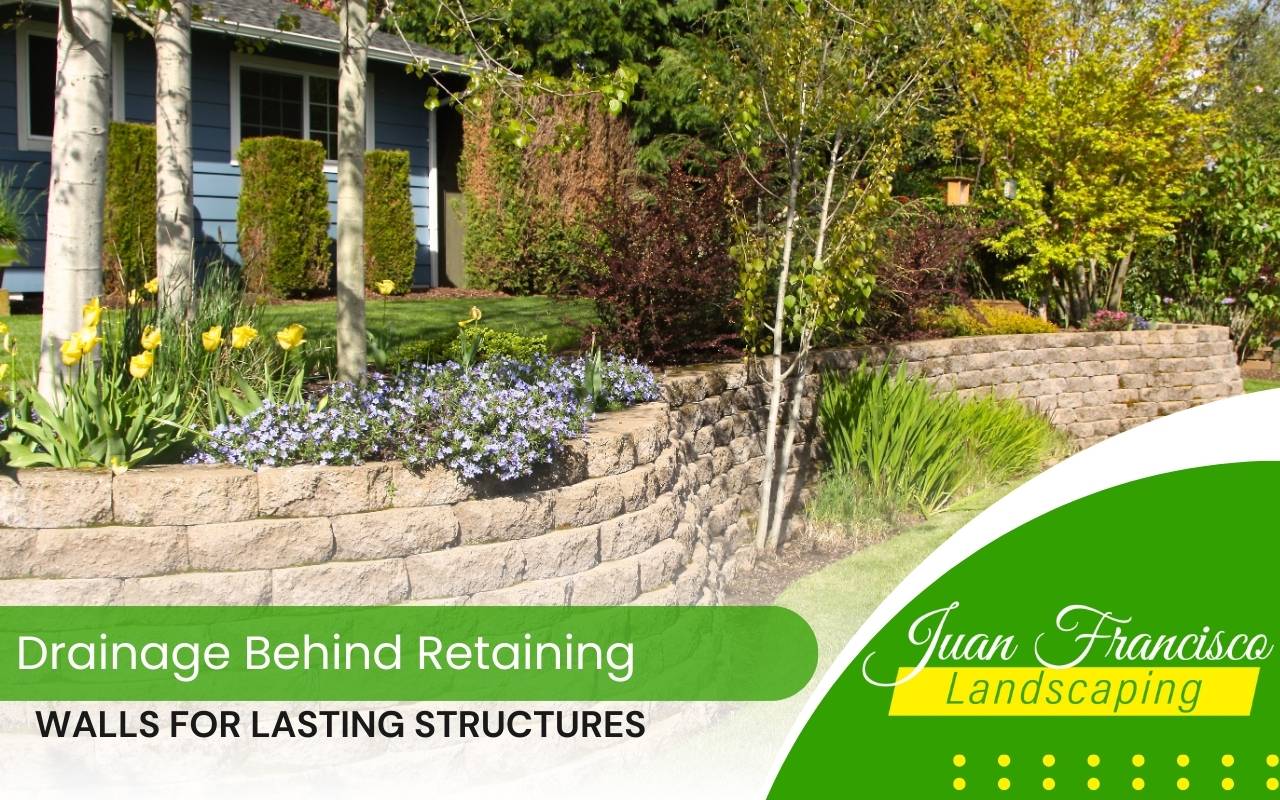
Drainage Behind Retaining Walls for Lasting Structures
Retaining walls support landscapes, but their durability depends on proper drainage behind retaining walls. Without drainage, costly failures happen.
Because water and soil are powerful, poor management damages walls. Therefore, investing in drainage ensures strength, safety, and beauty.
Although signs may appear slowly, pressure builds beneath the surface. As a result, walls weaken until visible cracks or leaning appear.
Importance of Proper Drainage Behind Retaining Walls
Walls resist soil pressure. However, water behind them increases stress significantly. Thus, drainage behind retaining walls is essential.
Good drainage directs water away. Moreover, it prevents erosion, mold growth, and instability, extending the lifespan of outdoor spaces.
- Relieves hydrostatic pressure behind walls
- Prevents erosion and structural weakening
- Reduces costly repairs over time
Discover more about erosion control with hardscaping.
Effects of Poor Drainage on Wall Integrity
Poor drainage behind retaining walls creates hydrostatic pressure. Consequently, cracks, bulging, and leaning soon appear on structures.
Additionally, saturated soil erodes, forms voids, and destabilizes foundations. In colder climates, frost heave worsens the situation rapidly.
Biological growth and chemical reactions further damage walls. Therefore, addressing drainage deficiencies early protects both strength and appearance.
Signs of Inadequate Drainage
Warning signs include damp patches, staining, bulging, and wall tilting. Vegetation growth also signals excess moisture behind walls.
Indeed, listening for creaks from shifting soil helps detect problems. Visible erosion at the base confirms that drainage behind retaining walls is failing.
- Discoloration or damp wall sections
- Cracks or visible bulging
- Erosion at the foundation base
Best Practices for Drainage Systems Design
Effective design begins with assessing soil and slope. Sandy soils drain well, while clay requires stronger drainage solutions.
Therefore, use gravel backfill, perforated pipes, and geotextiles to create reliable drainage behind retaining walls. Add weep holes for safety.
Additionally, surface solutions like gutters and swales divert rainfall. Together, these practices ensure stable, long-lasting retaining wall performance.
Learn more about hardscape drainage solutions for different landscapes.
Types of Drainage Solutions for Retaining Walls
Different site conditions require specific drainage methods. Gravel trenches, perforated pipes, and weep holes are all effective.
Moreover, geotextile fabrics maintain flow by filtering fine soil. Consequently, combining subsurface and surface methods strengthens retaining wall systems.
- Gravel backfill to create drainage pathways
- French drains for guiding water away
- Weep holes for pressure relief
Implementing French Drains
French drains are reliable systems for moving water. They include perforated pipes surrounded by gravel, sloped toward safe outlets.
Because water flows easily, French drains reduce hydrostatic pressure. Moreover, they adapt to many soil conditions and climates.
Regular inspection ensures continuous function. Consequently, maintenance keeps drainage behind retaining walls working efficiently for years.
Installing Weep Holes
Weep holes relieve trapped water by releasing it through wall openings. Placed correctly, they prevent wall deformation and cracks.
Spacing should be every few feet. Additionally, pipes or PVC extensions provide durability. Regular cleaning ensures unblocked flow.
Finally, weep holes remain simple yet effective drainage methods for retaining wall protection.
Utilizing Geotextiles
Geotextiles filter soil while allowing water to pass. They protect gravel and pipes from clogging, improving drainage performance.
Nonwoven fabrics provide ideal permeability. Installed properly, they extend the lifespan of drainage behind retaining walls significantly.
This layer also prevents backfill washout. Therefore, geotextiles preserve stable soil conditions over time.
Maintenance Tips for Drainage Systems
Routine checks preserve system performance. After storms, clear outlets, basins, and swales of debris for proper water flow.
Additionally, flush pipes regularly and check geotextiles for intrusion. Trim vegetation that could block drainage behind retaining walls.
Repair cracks quickly to prevent worsening damage. As a result, early action keeps retaining walls safe and attractive.
FAQs
Why is drainage behind retaining walls important?
It relieves hydrostatic pressure, prevents erosion, and extends wall life by channeling water safely away.
What are the signs of poor drainage?
Damp patches, bulging, cracks, or vegetation growth indicate inadequate drainage behind retaining walls.
How do French drains help?
French drains redirect water away, reducing soil saturation and pressure behind the wall structure.
Where should weep holes be placed?
Weep holes are best positioned near the base, spaced every two to four feet.
When should I consult professionals?
If water pools regularly or cracks appear, contact our experts for solutions.
Ensuring the Longevity of Retaining Walls
Effective drainage behind retaining walls combines gravel backfill, French drains, weep holes, and geotextiles for stability.
Regular inspections and maintenance guarantee long-term durability. As a result, landscapes remain functional, safe, and visually appealing.
Explore retaining wall design options or learn about safe pathways on slopes for complete protection.