
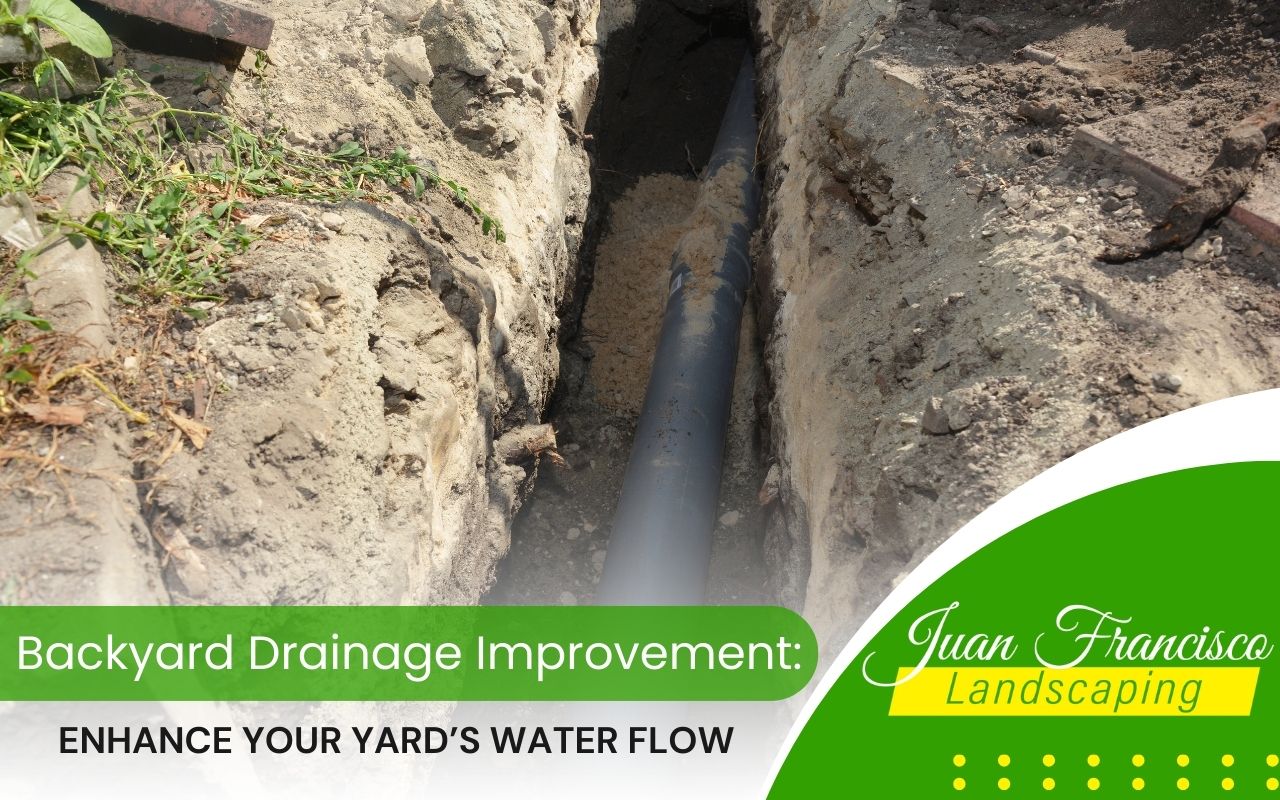
Backyard Drainage Improvement: Enhance Your Yard’s Water Flow
If you’re experiencing water pooling, flooding, or erosion issues in your backyard, backyard drainage improvement is key to maintaining a healthy lawn and protecting your property. In Knoxville, where clay-heavy soil and heavy rainfall can cause drainage problems, addressing these issues early is essential. Implementing proper drainage solutions can enhance water flow, prevent flooding, and create a healthier, more resilient landscape.
Understanding Backyard Drainage Problems
What Causes Drainage Issues in the Backyard?
Poor soil structure, improper grading, and clogged or insufficient drainage systems often cause backyard drainage problems. In areas with heavy clay soils, such as Knoxville, water tends to pool on the surface rather than filter into the ground. Other common causes of backyard drainage issues include blocked gutters, downspouts that direct water toward the yard, and low spots in the landscape that trap water. Identifying the root causes of your drainage issues is the first step in improving your backyard’s drainage.
Effective Backyard Drainage Improvement Techniques
1. Improve Yard Grading
One of the most effective ways to improve backyard drainage is by adjusting the grading of your yard. Proper grading ensures water flows from your home and toward designated drainage areas. If your yard is sloping toward your foundation, it’s essential to re-grade the landscape to create a gentle slope that directs water away from your home. This simple adjustment can prevent water from pooling near your foundation and reduce the risk of flooding.
2. Install a French Drain
A French drain is a popular solution for improving drainage in areas with heavy rainfall. Installing a trench filled with gravel and a perforated pipe creates a pathway for water to flow through the soil and away from the surface. French drains are particularly effective in areas where water pools, as they allow water to flow underground and prevent surface flooding.
3. Add a Dry Well
A dry well is an underground reservoir that collects excess water, allowing it to filter into the soil slowly. This solution is beneficial in areas that experience frequent water pooling. Installing a dry well in low-lying areas of your backyard helps manage runoff and reduces the chance of flooding. It also keeps water from overflowing into other areas of your landscape.
4. Create Swales and Berms
Swales and berms are landscaping features that help redirect water flow. A swale is a shallow ditch that channels water to a designated area, while a berm is a raised mound of soil that diverts water away from specific areas. By combining swales and berms, you can control water flow and direct it away from vulnerable spots in your yard, such as low areas or near your home’s foundation.
Eco-Friendly Backyard Drainage Solutions
5. Use Permeable Paving
Traditional hard surfaces like concrete and asphalt prevent water from flowing into the ground, which leads to runoff and pooling. Permeable paving materials, such as gravel, porous concrete, and permeable pavers, allow water to seep through and be absorbed by the soil below. Replacing impermeable surfaces with permeable materials improves the overall drainage in your backyard and reduces the likelihood of flooding.
6. Install a Rain Garden
A rain garden is an excellent way to capture excess water and filter it through natural processes. It is designed to collect runoff from your yard and allow it to slowly seep into the ground. Using native plants that thrive in wet conditions, rain gardens help manage water, prevent erosion, and improve soil health. Plus, they provide an attractive addition to your landscape.
Regular Maintenance for Long-Term Backyard Drainage Improvement
7. Clean Gutters and Downspouts
Clogged gutters and downspouts can cause water to overflow and accumulate in your backyard. Regularly cleaning your gutters ensures water flows freely from your roof and foundation. Consider installing gutter guards to prevent leaves and debris from clogging the system. Ensure your downspouts extend several feet from your home to direct water away from your foundation.
8. Aerate Your Lawn
Aerating your lawn helps improve soil structure and water infiltration. By perforating the soil with small holes, you allow water to penetrate deeper and reduce surface pooling. Aeration also helps break up compacted soil, typical in clay-heavy areas, making it easier for water to flow into the ground.
Protect Your Backyard with Expert Drainage Solutions
Improving your backyard drainage doesn’t have to be complicated. With the right solutions and regular maintenance, you can prevent flooding, enhance water flow, and create a healthier landscape. At Juan Francisco Landscaping, we specialize in backyard drainage improvement and can help you design a drainage system that meets your needs. Contact us today at (865) 455-3964 to schedule a consultation.