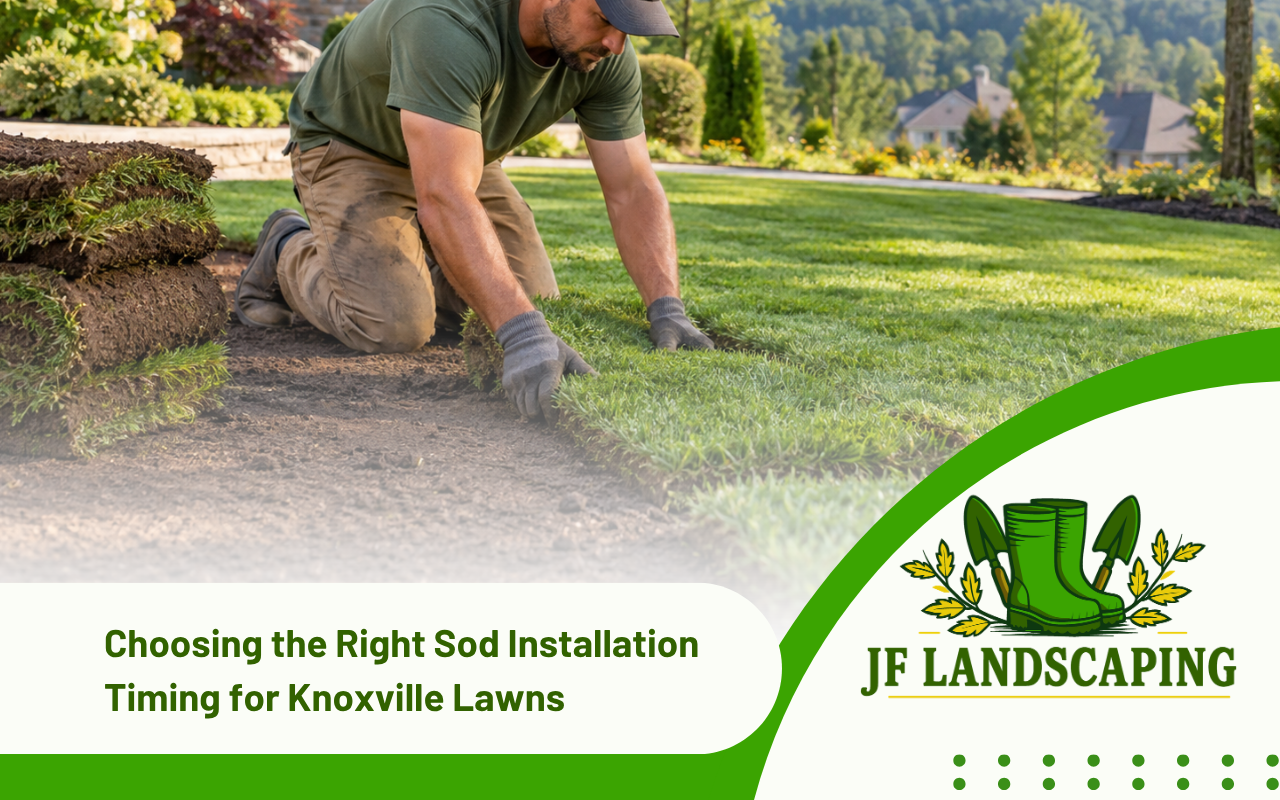
Choosing the Right Sod Installation Timing for Knoxville Lawns
Early fall is often one of the best installation periods for Knoxville lawns. Cooler air can reduce heat stress, while the soil may remain warm enough to support root development. Spring can also produce strong results when the sod has enough time to establish before sustained summer heat arrives.
However, the right sod installation timing depends on more than a season. Grass type, soil condition, irrigation availability, expected weather, and project urgency should all influence the decision. This guide helps residential and commercial property owners choose a practical installation window.
If you are planning a local project, explore our professional sod installation in Knoxville for help evaluating your lawn and preparing the installation area.
When Is the Best Time to Lay Sod?
The best time to lay sod in Tennessee is generally during a period of moderate temperatures when the ground is workable and dependable watering is available. Spring and early fall usually provide more manageable conditions than extreme summer heat or frozen winter soil.
New sod needs time to form contact with the prepared soil and begin developing roots. Property owners should consider both current weather and the conditions expected during the weeks following installation.
Compare Sod Installation Timing by Season
Each season can work under the right conditions, but each one also creates different risks. The best choice depends on how soon the lawn is needed, how reliable watering will be, and whether the soil is ready.
Seasonal Sod Timing Guide
| Season | Main Advantage | Primary Challenge | Best Situation |
|---|---|---|---|
| Spring | Moderate growing conditions | Increasing heat and watering needs | Lawns needed before summer |
| Summer | Active grass growth | Rapid moisture loss and heat stress | Properties with dependable irrigation |
| Early fall | Warm soil and cooler air | Limited time before cold weather | Lower-stress root establishment |
| Winter | Lower evaporation during mild periods | Slow or dormant root activity | Suitable grass and workable soil |
Key Takeaway
Spring and early fall are often easier installation windows, but soil preparation and watering access matter as much as the calendar.
Spring Installation Helps Lawns Establish Before Summer
Spring offers warming soil, moderate temperatures, and seasonal rainfall. Installing early gives the sod time to begin rooting before the hottest months. It can be useful when homeowners want a functional lawn for summer activities.
However, a late-spring installation may encounter high temperatures before the roots become established. As conditions become warmer, the lawn may require closer moisture monitoring. Natural rainfall should support an installation plan, not replace dependable watering.
Early Fall Can Reduce Heat Stress During Establishment
Early fall often combines cooler air with soil that retains warmth from summer. These conditions can reduce surface stress while allowing continued root development.
Installation should still happen early enough for the sod to begin anchoring before colder conditions slow growth. For a more detailed comparison, review our guide to spring versus fall sod installation.
Can Sod Be Installed During Tennessee Summers?
Sod can be installed during summer, but higher temperatures make moisture management more demanding. Fresh pieces have limited root access to water, and exposed sod can dry quickly before or immediately after placement.
Summer Installation Works Better When
- Reliable irrigation reaches the entire lawn area.
- The soil is prepared before the sod arrives.
- The delivered sod can be installed promptly.
- Moisture can be monitored during hot or windy weather.
- Traffic can remain limited while roots develop.
If those conditions cannot be maintained, postponing installation until milder weather may reduce preventable stress and uneven growth.
Can Sod Be Installed During Knoxville Winters?
Winter installation may be possible during mild periods, depending on the grass variety and ground conditions. However, colder soil slows root activity. Frozen or saturated ground also prevents proper grading and soil contact.
Dormant sod may remain brown until seasonal growth returns, even when the grass is viable. Winter installation should be delayed if the soil is frozen, muddy, or covered by standing water.
Prepare Soil Before Scheduling Sod Delivery
Favorable weather cannot compensate for poor ground preparation. Sod needs close contact with prepared soil to begin developing roots. Compaction, rocks, old turf, construction debris, and uneven grading can interfere with that contact.
Before installation, the soil should be workable and slightly moist rather than muddy. Drainage problems and low areas should also be corrected before the sod arrives.
Soil Preparation Checklist
- Remove weeds, rocks, old grass, and buried debris.
- Correct low spots where water collects after rainfall.
- Grade the surface to support appropriate drainage.
- Verify that irrigation reaches the entire planned lawn.
- Select sod suited to the property’s sunlight conditions.
Watch Weather Before Choosing an Installation Date
The calendar alone cannot determine whether an installation should proceed. Heavy rain may leave the soil too saturated for preparation. Extended heat and wind can increase moisture loss, while freezing weather can prevent root development.
Consider delaying the project when the ground is frozen, excessively wet, or too dry to grade correctly. An approaching heat wave, severe storm, or hard freeze may also justify selecting another installation date.
Key Takeaway
Good sod installation timing means choosing a season and a specific weather window that supports soil contact and root growth.
Watering Needs Change With Seasonal Conditions
New sod needs consistent moisture, although the required schedule varies by season, soil drainage, sunlight, wind, and grass type. A fixed watering routine may provide too much moisture in one area and too little in another.
Spring and fall may offer lower evaporation, but rainfall still requires monitoring. Summer sod generally demands closer attention. Excessive watering should also be avoided because saturated soil can interfere with root growth.
Know When to Delay Sod Installation
Waiting may protect the project when site or weather conditions are unsuitable. A short delay is often more practical than installing sod that cannot receive appropriate preparation or early care.
Delay Installation When
- The soil is frozen, muddy, or deeply saturated.
- An extreme heat event or hard freeze is approaching.
- Reliable watering will not be available after installation.
- The area still needs grading or drainage correction.
- Delivered sod cannot be installed without a significant delay.
- Heavy property traffic cannot be temporarily redirected.
Which Season Is Best for Your Sod Project?
Spring can work well when you want the lawn established before summer and have reliable watering. Early fall may be preferable when reducing heat stress is the main concern. Summer requires closer moisture management, while winter depends heavily on grass type and soil conditions.
Before Scheduling, Review
- Temperatures expected after installation.
- Consistent irrigation or watering access.
- Sod variety and sunlight conditions.
- Whether the project can wait for milder weather.
- Upcoming extreme heat, storms, or frost.
- Soil and drainage problems that need correction.
Frequently Asked Questions
What is the best season for sod installation in Knoxville?
Spring and early fall are often practical because temperatures are more moderate. The right choice still depends on soil, watering, grass type, and expected weather.
Can sod be installed in summer?
Yes, but summer installation requires dependable watering, quick installation, and careful moisture monitoring because heat can dry new sod quickly.
Should sod be installed before rain?
Light rain may help, but heavy rain can make soil too muddy for proper preparation. The soil should be workable and not saturated.
How long does new sod take to root?
Initial anchoring may begin during the first several weeks, but complete establishment takes longer depending on weather, soil contact, watering, and grass variety.
When should I delay sod installation?
Delay installation when soil is frozen, muddy, deeply saturated, extremely dry, or when reliable watering is not available after installation.
Plan Your Knoxville Sod Installation With JF Landscaping
At JF Landscaping, we provide residential and commercial sod installation backed by more than 13 years of experience. We evaluate the property, soil preparation, watering access, and expected weather before recommending suitable sod installation timing.
Property owners can also explore sod installation in Oak Ridge or sod installation in Maryville for nearby service information.
We offer free estimates and are available Monday through Friday from 7:00 a.m. to 7:00 p.m. To discuss the most appropriate installation window for your property, request your free estimate today.