
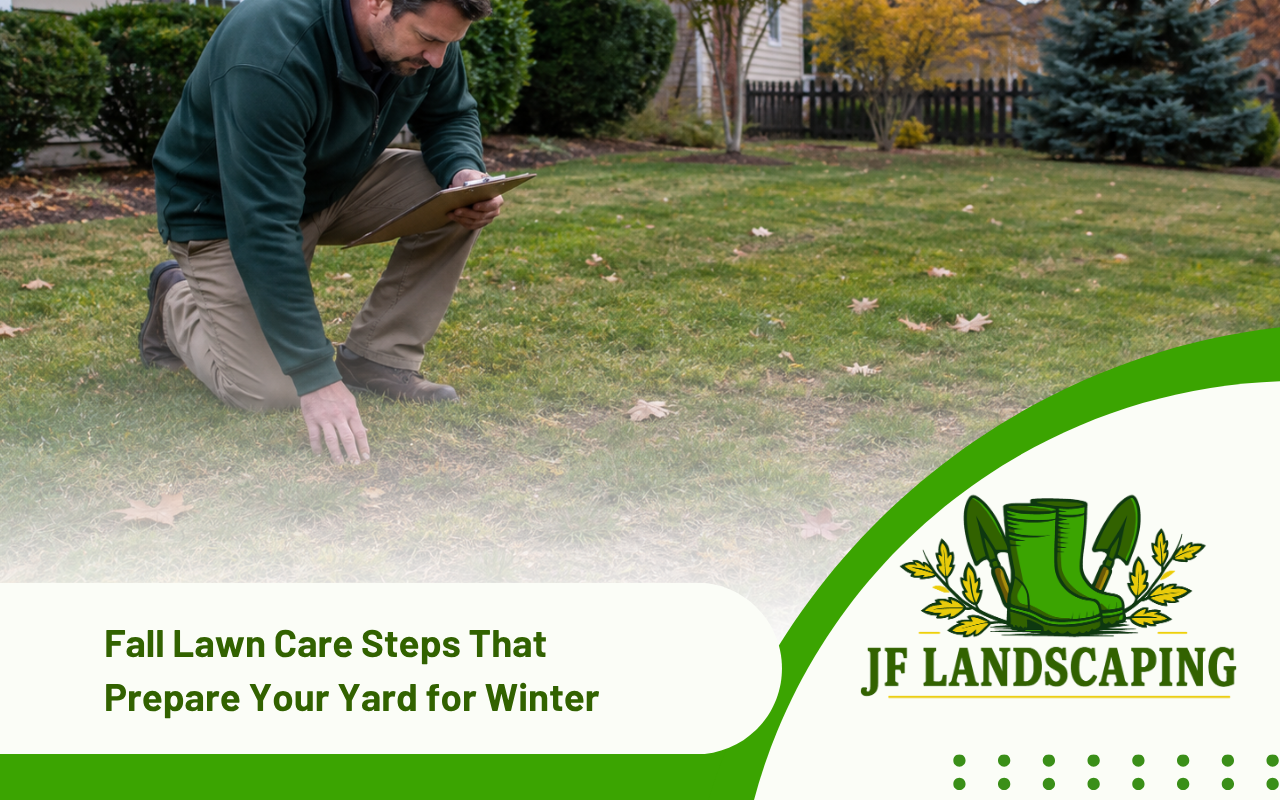
Fall Lawn Care Steps That Prepare Your Yard for Winter
Good fall lawn care helps grass recover from summer stress, build stronger roots, and prepare for cooler weather. The most important steps include checking lawn condition, removing heavy leaf cover, fertilizing, overseeding thin areas, adjusting watering, and mowing at the right height before winter.
At JF Landscaping, we help residential and commercial properties improve seasonal lawn health with 13+ years of experience and free estimates. If your yard has thin grass, weeds, compacted soil, or poor color, request lawn care help before colder weather arrives.
Start by Checking the Lawn’s Current Condition
Before applying fertilizer or seed, inspect the lawn carefully. Fall lawn maintenance works better when you know what problem you are trying to solve.
Look for These Lawn Issues
- Thin or bare patches
- Weed growth
- Compacted soil
- Heavy leaf buildup
- Weak color or slow growth
- Drainage problems after rain
If several issues appear at once, it may be better to plan the work in phases instead of applying random products.
Use Fall Fertilization to Support Root Strength
Fall is an important time to feed the lawn because grass can use nutrients to strengthen roots before winter. A balanced lawn fertilization plan can support recovery, color, and spring growth.
However, fertilizer should match the lawn’s condition. Too much product or the wrong timing can stress grass or create uneven results.
For professional support, review our lawn fertilization service.
Key Takeaway
Fertilization should support root strength and recovery, not just make the lawn look greener for a short time.
Compare Fall Lawn Care Tasks by Lawn Condition
Different lawns need different fall care. A thin lawn may need overseeding, while a compacted lawn may benefit from aeration. A yard covered in leaves may need cleanup before any treatment can work well.
Fall Lawn Maintenance Decision Table
| Lawn Condition | Best Fall Task | Why It Helps | Priority |
|---|---|---|---|
| Thin or bare patches | Overseeding | Helps fill weak areas before spring | High |
| Compacted soil | Aeration | Improves air, water, and nutrient movement | High |
| Poor color or weak growth | Fertilization | Supports root strength and recovery | High |
| Heavy leaf cover | Leaf cleanup | Prevents smothering and moisture problems | Medium |
| Weed pressure | Targeted lawn care plan | Reduces competition before spring growth | Medium |
Remove Leaves Before They Smother the Grass
Leaves can look harmless at first, but heavy buildup blocks sunlight and traps moisture. This can weaken grass and create conditions for bare spots or disease.
Rake leaves regularly or mulch lighter leaf cover into smaller pieces when appropriate. Avoid leaving thick, wet layers sitting on the lawn for long periods.
Key Takeaway
Leaf management is not only cosmetic. It helps grass breathe, receive light, and avoid excess moisture.
Overseed Thin Areas Before Winter
Overseeding can help improve thin sections and prepare the lawn for stronger growth. It works best when seed has good soil contact and the area receives proper moisture.
Before seeding, remove debris, loosen compacted soil when needed, and avoid burying seed under heavy leaves. For severely damaged lawns, sod installation in Knoxville may be a better option.
Adjust Watering as Temperatures Drop
Cooler weather usually means the lawn needs less frequent watering than it did in summer. Still, newly seeded areas may need consistent moisture while they establish.
Avoid overwatering shaded or slow-draining sections. Wet soil can create weak roots and increase lawn problems before winter.
Follow a Practical Fall Lawn Care Checklist
A checklist makes lawn maintenance for fall easier to manage. It also helps prevent important steps from being skipped.
Fall Lawn Care Checklist
- Inspect bare spots, weeds, and compacted soil.
- Remove heavy leaves and debris.
- Aerate compacted areas when needed.
- Fertilize based on lawn condition.
- Overseed thin sections with proper soil contact.
- Water new seed carefully.
- Mow at a healthy height before winter.
- Schedule service if problems are widespread.
For more seasonal planning, use our lawn maintenance checklist.
Avoid Common Fall Lawn Care Mistakes
Many fall lawn problems come from doing the right task at the wrong time or skipping preparation. Applying seed over leaves, fertilizing weak soil without inspection, or cutting grass too short can reduce results.
Common Mistakes to Avoid
- Leaving heavy leaves on the lawn
- Overwatering shaded areas
- Cutting grass too short before winter
- Applying fertilizer without checking lawn condition
- Seeding without soil contact
- Ignoring compacted soil
You can also review our lawn care tips for additional maintenance guidance.
Suggested Infographic: Fall Lawn Care Timeline
A simple infographic can help readers understand what to do first. The graphic should show the order of fall lawn care tasks so homeowners can act without guessing.
Infographic Sections
- Step 1: Inspect lawn condition
- Step 2: Remove leaves and debris
- Step 3: Aerate compacted soil
- Step 4: Fertilize and overseed where needed
- Step 5: Adjust watering and mowing
Fall Lawn Care FAQs
What is the most important fall lawn care task?
The most important task depends on lawn condition. Thin lawns may need overseeding, while weak lawns may need fertilization or aeration.
Should I fertilize my lawn in the fall?
Fall fertilization can support root strength and recovery when the product, timing, and application match the lawn’s condition.
Can I overseed during fall lawn maintenance?
Yes. Fall can be a useful time to overseed thin areas when seed has good soil contact and consistent moisture.
Should leaves be removed before winter?
Yes. Heavy leaves can block sunlight, trap moisture, and smother grass if they stay on the lawn too long.
Does JF Landscaping offer free estimates?
Yes. JF Landscaping offers free estimates for residential and commercial lawn care and landscaping projects.
Prepare Your Lawn Before Cold Weather Arrives
A stronger lawn starts with the right fall plan. By inspecting the yard, removing leaves, fertilizing, overseeding, and adjusting watering, you can help grass enter winter in better condition.
Start your lawn care plan with JF Landscaping for free estimates, residential and commercial service, and 13+ years of experience.